विशेष लेख
Goldfish (Carassius auratus): Natural History and Species Profile
The goldfish, scientifically known as Carassius auratus, is a prominent member of the Cyprinidae family, which includes minnows and carps. While widely recognized as a common household pet, this species possesses a complex biological profile, a vast global range, and significant ecological adaptability.
Marcus Adrian Langston
लेखक
लेख परिचय
नीचे पूरा लेख पढ़ें।
अनुभाग
समाचार
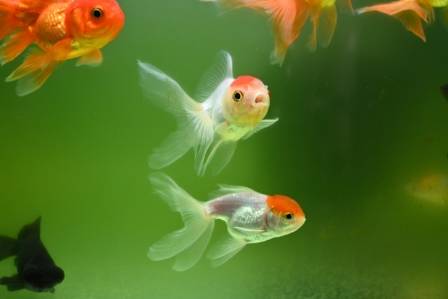
The goldfish, scientifically known as Carassius auratus, is a prominent member of the Cyprinidae family, which includes minnows and carps. While widely recognized as a common household pet, this species possesses a complex biological profile, a vast global range, and significant ecological adaptability.
Geographical Distribution and Environmental Habitat
Originating in East Asia—specifically across China, Taiwan, Hong Kong, and Korea—the goldfish has seen its range expand globally. Human introduction has established populations across the United States, including various Great Lakes and western regions, as well as in Canada, Europe, South Africa, and parts of India.
Goldfish primarily inhabit temperate freshwater inland environments such as lakes, ponds, sluggish rivers, and various wetlands like marshes and swamps. They generally prefer depths of around 10 meters but can be found anywhere from 1 to 20 meters deep. While they are freshwater fish, they exhibit a notable tolerance for low salinity levels. They are remarkably hardy, surviving in temperatures ranging from near freezing to as high as 40°C, and can withstand pH levels from 5.5 to 10.5.
Physical Characteristics and Development
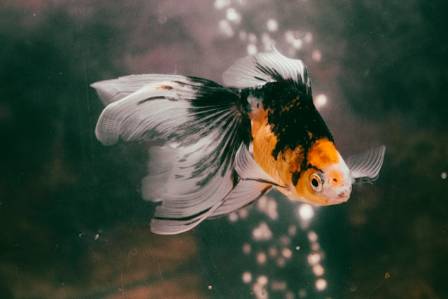
Adult goldfish typically measure between 15 and 45 centimeters in length and can weigh up to 3 kilograms. While they hatch with dark pigmentation, they transition to their signature yellow-orange hue approximately two to three months later. In captive environments, selective breeding and diet can produce variations in red, black, silver, or white. Interestingly, wild goldfish often grow larger than their domestic counterparts due to increased space and resources.
Their anatomy includes a suite of five fin types—dorsal, anal, caudal, and pairs of pectoral and pelvic fins—which facilitate efficient movement. Their scales are categorized into three types: matte (transparent), metallic (reflective), and nacreous (semi-transparent). As ectothermic animals, goldfish rely on their surrounding water temperature to regulate their internal heat.
Goldfish exhibit "indeterminate growth," meaning they continue to increase in size throughout their lives. Development begins when sticky eggs are attached to aquatic vegetation. After a gestation period of roughly 2 to 9 days, larvae hatch at about 4.5 millimeters. It typically takes three years for a goldfish to reach full adulthood, after which their growth rate slows to approximately 2.5 centimeters per year.
Reproduction and Life Cycle
Goldfish follow a polygynandrous mating system where both males and females have multiple partners during a single season. Breeding is seasonal, typically occurring from February to June when water temperatures exceed 10°C. Females release pheromones to signal males, leading to a ritual of chasing and bumping. External fertilization occurs as males release milt (sperm) near the spawned eggs.
A single female can produce between 2,000 and several hundred thousand eggs in one spawning. Once the eggs hatch, the larvae are immediately independent. Goldfish provide no parental care; in fact, adults are known to consume their own eggs and offspring. In the wild, these fish typically live between 20 and 30 years, significantly longer than the 5 to 10 years often seen in small captive tanks, though some individuals have reached over 40 years of age.
Behavior, Communication, and Sensory Perception
Social by nature, goldfish form groups known as schools or shoals. This behavior provides a collective defense against predators and assists in foraging. They are non-aggressive and do not establish strict social hierarchies. While active throughout the day, they are most energetic during dawn and dusk. In colder months, they enter a state of hibernation if temperatures drop below 10°C.
Their sensory capabilities are advanced. Goldfish are tetrachromats, meaning they can see red, green, blue, and ultraviolet light. The ability to see UV wavelengths helps them detect prey and predators through water reflections. They also possess a "lateral line" system—a series of sensory organs that detect vibrations, currents, and pressure changes in the water. Furthermore, their inner ear is coupled to their gas bladder, allowing them to perceive a wide range of acoustic frequencies.
Dietary Habits and Ecological Impact
As opportunistic generalist omnivores, goldfish consume a varied diet including aquatic plants, algae, insects (such as mosquito larvae), small crustaceans like brine shrimp, and detritus. They forage through vegetation and sandy substrates to find food. In captivity, they are usually fed processed flakes supplemented with vegetables.
In their ecosystems, goldfish act as both prey and predators. They serve as a food source for various mammals, birds, and reptiles, such as herons, otters, and water snakes. They also play a role in "bioturbation," the stirring up of sediment during foraging and spawning, which helps redistribute nutrients throughout the water column. However, because they are so hardy and can tolerate high levels of ammonia and pollution, they are often considered an invasive species in non-native waters, where they may outcompete local fauna.
Relationship with Humans and Conservation Status
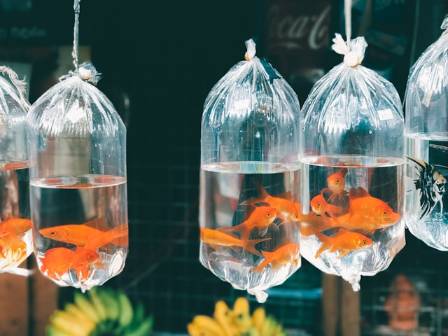
Goldfish hold significant economic value as the most popular aquarium fish globally. They are also utilized in scientific research, particularly for toxicity and behavioral studies.
Currently, the goldfish is classified as a species of "Least Concern" on the IUCN Red List. They face no immediate threat of extinction due to their high reproductive rates and ability to thrive in diverse, even degraded, environments. While there are few conservation efforts to protect them, many regions have implemented management programs to prevent their spread as an invasive species in local ecosystems.
यह भी पढ़ें

हार्वेस्ट गोल्ड इंटीरियर टोन के साथ अपने रहने की जगह को बदलें
रणवीर बिष्ट

Osaka Castle: A Journey Through Four Centuries of Japan’s Turbulent Past
Oliver Bennett

ऑफ-रोड लीजेंड का 2020 लैंड रोवर डिफेंडर के बारे में विवादास्पद विचार
वैभवी
घास के मैदानों के बगीचे आजकल तेज़ी से लोकप्रिय हो रहे हैं—इसे कैसे उगाएँ, जानिए
अनिता

अपने स्वाद के अनुरूप आदर्श थाई करी ढूँढना
ज्योति मिश्र

कंप्यूटर के इतिहास पर बच्चों के लिए एक बेहतरीन गाइड
दिव्या