विशेष लेख
The Surprising History and Cutting Edge Future of Modern Prosthetics
A prosthesis is a specialized artificial device designed to replace a missing human body part. Individuals lose limbs or organs through severe physical trauma, progressive illness, or congenital conditions present from birth. These devices work to restore original physical functionality or provide aesthetic visual completeness. A person living with an amputation undergoes comprehensive physical rehabilitation coordinated by specialized medical teams. These care teams include rehabilitation physicians, prosthetists, physical therapists, occupational therapists, and nursing staff. Technicians construct modern devices using manual craftsmanship or computer design software. Design software enables precise two-dimensional and three-dimensional modeling alongside advanced structural analysis.
Ruby Sinclair
लेखक
लेख परिचय
नीचे पूरा लेख पढ़ें।
अनुभाग
समाचार
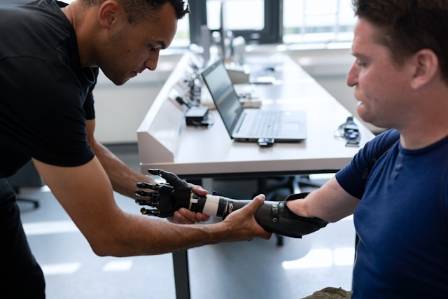
A prosthesis is a specialized artificial device designed to replace a missing human body part. Individuals lose limbs or organs through severe physical trauma, progressive illness, or congenital conditions present from birth. These devices work to restore original physical functionality or provide aesthetic visual completeness. A person living with an amputation undergoes comprehensive physical rehabilitation coordinated by specialized medical teams. These care teams include rehabilitation physicians, prosthetists, physical therapists, occupational therapists, and nursing staff. Technicians construct modern devices using manual craftsmanship or computer design software. Design software enables precise two-dimensional and three-dimensional modeling alongside advanced structural analysis.
Diverse Categories of Specialized Prosthetic Devices
Every device is tailored to fit the specific physical needs and functional goals of the user. Medical decisions balance appearance, mechanical capability, financial budget, and available healthcare coverage. Facial and head devices address internal oral needs like dentures or external areas like ears, noses, and eyes. Neck components replace damaged voice boxes, windpipes, or upper swallowing tubes. Torso options include single or dual breast replacements and nipple structures. Specialized intimate devices treat erectile difficulties, assist with reconstructive surgeries, or aid gender affirmation procedures. Internal organ replacements even include artificial hearts and mechanical kidney systems.
Upper Limb Technology and Modern Control Methods
Upper extremity replacements span from individual fingers up to full shoulder attachments. Below-elbow devices replace lost lower arm sections. Users choose from passive devices, body-powered options, or motorized myoelectric systems. Passive limbs offer aesthetic symmetry or specialized tool attachments for hobbies and work tasks. Nearly one third of upper limb users choose passive hands for daily support activities. Body-powered options use shoulder harnesses and cables to manipulate mechanical joints. Some modern systems even harness user breathing patterns to drive limb movement. Myoelectric limbs rely on internal rechargeable batteries to power active motors. These systems use skin sensors to detect tiny electrical signals generated by flexing residual muscles. Computer chips convert those muscle signals into natural hand grips and finger movements.
Lower Limb Solutions and Mobility Restoration
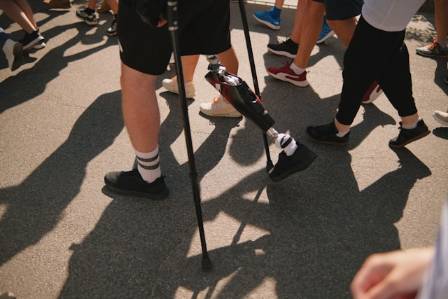
Lower limb replacements cover missing toes, feet, lower legs, knees, and entire hip joints. Above-knee replacements require significantly more physical effort from the user. Walking with an artificial knee joint demands nearly eighty percent more energy than natural walking. Modern designs incorporate hydraulic cylinders, carbon fiber frames, mechanical links, microprocessors, and electric motors to smooth out user motion. Below-knee replacements allow easier recovery because the natural knee joint remains intact. Certified prosthetists construct and align these lower limbs precisely. Physical therapists train users on walking techniques, often utilizing specialized treadmills during home or clinical sessions. Circulation problems cause three quarters of lower limb amputations in some countries, often complicated by diabetes or heart conditions. Specialized wheeled frames also help injured domestic pets like dogs, cats, and turtles regain mobility.
Ancient Origins and Historical Milestones of Artificial Limbs
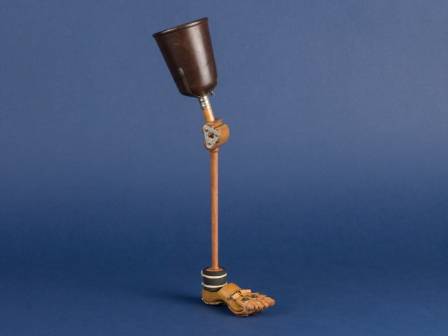
Artificial body parts date back thousands of years to ancient Near Eastern civilizations. Archaeologists discovered a bitumen and gold artificial eye in ancient Iran dating back to 3000 BC. Ancient Egyptians crafted wooden big toes for living wearers around 1000 BC. Early Greek historical accounts mention prisoners carving wooden feet to escape captivity. Roman soldiers used custom iron hands to hold shields during battle. Medieval knights used heavy metal limbs to grip swords, lances, and reins on horseback. An ancient Italian skeleton revealed a user who attached a knife blade to his forearm using leather straps. Renaissance inventors advanced the field by incorporating gears, springs, steel, and copper into limb designs. Early medical pioneers developed articulated knees, peg legs, adjustable harnesses, and lightweight aluminum limbs.
Modern Innovations and the Future of Bionic Limbs
World War II accelerated governmental funding for advanced limb research and development. In the early 1990s, manufacturers introduced the first microprocessor-controlled artificial knees. These smart knees continuously adjusted resistance to create a natural walking rhythm. Recent initiatives produced advanced robotic arms capable of complex tasks through muscle signal translation. Today, lightweight materials like carbon fiber, silicone, and advanced polymers make limbs far more comfortable and durable. Integrated bionics allow users to control artificial fingers with subtle muscle contractions. Artificial intelligence algorithms now learn user walking habits and adjust joint resistance in real time. Modern prosthetists create custom socket fittings quickly using lightweight thermoplastics, making advanced mobility accessible to more people worldwide.
यह भी पढ़ें

दुनिया की सबसे अच्छी आइसक्रीम
कृष्ण
डिजिटल आर्टिस्टिक कौशल की बुनियाद: एक व्यापक प्रारंभिक मार्गदर्शिका
हर्षद पटेल

शीर्ष 10 कमल के फूल - कमल के फूलों की सबसे खूबसूरत किस्में
हर्ष

7 Essential Surfing Facts Every Beginner Should Know
Evelyn Parker

Swiss Roll Facts for Kids: The Delicious Spiral Cake Sensation
Daniel Young

The Resurgence of the Giant Panda: 15 Remarkable Insights
Evelyn Margot Sinclair