विशेष लेख
The Green Emperor: How a Tang Dynasty Medicine Became Japan’s Ultimate Cultural Icon
Discover the fascinating 1,400-year history behind matcha, exploring how an ancient Zen ritual evolved into the world's most celebrated modern superfood.
Thomas Reed
लेखक
लेख परिचय
नीचे पूरा लेख पढ़ें।
अनुभाग
समाचार
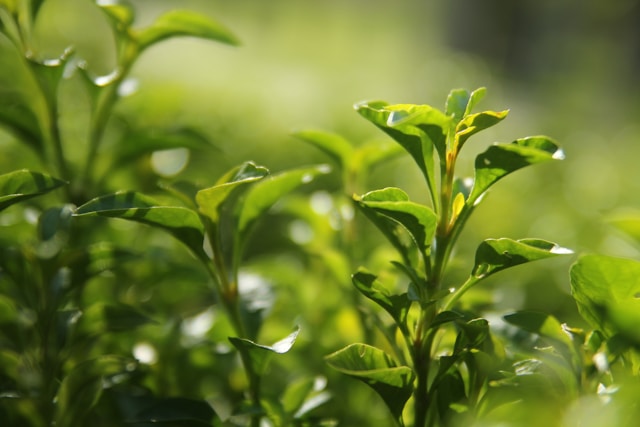
Ancient Origins in the Tang Dynasty
Tea served primarily as a therapeutic tonic during its earliest usage. Communities in Northwestern China boiled the foliage extensively to extract its bitter, restorative properties, valuing the liquid for its ability to ward off illness and provide warmth rather than for sensory pleasure.
The foundational precursor to modern matcha developed following the rise of the Tang Dynasty in 618 CE. To streamline trade and transportation along the Silk Road, growers steamed and compressed harvested tea leaves into dense bricks. Preparation required breaking off a portion of the brick, roasting it, milling it into a coarse powder using a mortar and pestle, and boiling the particles in water spiked with ginger and salt.
This structured methodology was recorded in the eighth century by scholar Lu Yu in his encyclopedia, The Classic of Tea. By documenting precise soil conditions, cultivation rules, and brewing implements, his work elevated tea consumption from a regional custom into a highly disciplined art form.
Refinement and Ritual in the Song Dynasty
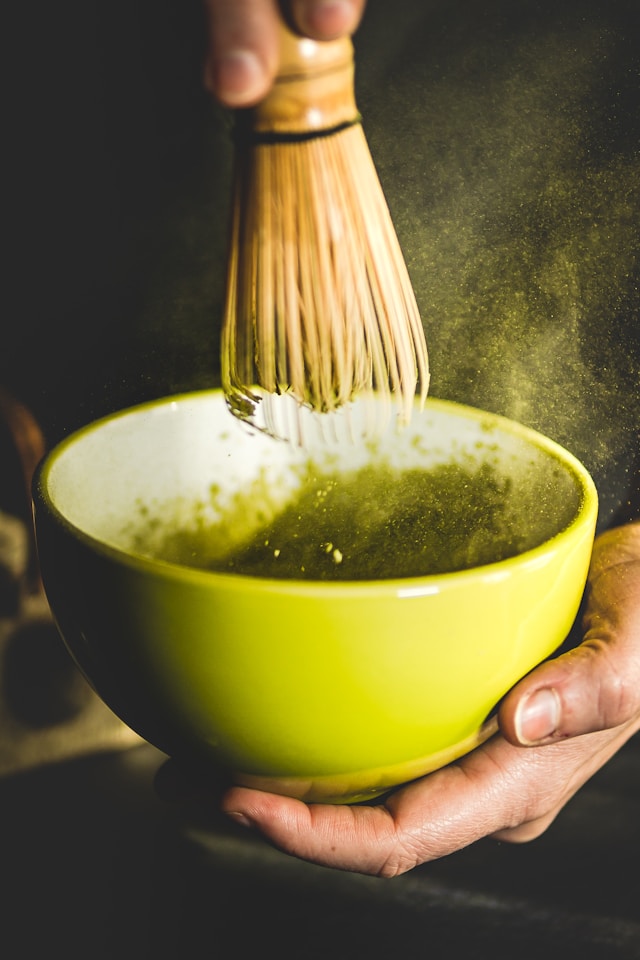
The preparation of powdered tea advanced significantly during the Song Dynasty, shifting the primary brewing technique from boiling to whisking. Workers steamed and dried premium leaves before milling them into a delicate powder. This dust was combined with hot water directly in a vessel and whipped into a thick froth using a bamboo whisk, a method known as dian cha. This elegant presentation fueled competitive gatherings among the imperial court and elite classes, who vied to identify the geographic origins of various harvests based entirely on the quality and endurance of the foam.
During this era, Chan Buddhist monasteries integrated the whisked beverage into their daily routines. Monks relied on the sustained mental clarity and prolonged stamina the powder provided during exhaustive meditation sessions. Consuming the entire pulverized leaf delivered a balanced combination of caffeine for alertness and L-theanine, an amino acid that induces a tranquil, focused state of mind without the agitation often caused by coffee.
The Transmission to Japan via Samurai and Monks
The introduction of this tradition to Japan occurred in 1191 when the Zen monk Myōan Eisai returned from his studies in China, bringing back Rinzai Zen teachings alongside tea seeds and Song-style preparation methods. While China later transitioned toward loose-leaf steeping during the Ming Dynasty, Japanese culture focused exclusively on perfecting the cultivation and preparation of pulverized tea.
Eisai authored Japan’s first treatise on the medical values of the plant, Drink Tea and Prolong Life, presenting it to the shogun as a divine elixir capable of restoring harmony to the vital organs. He promoted the beverage as a health tonic central to Zen discipline rather than a casual indulgence. Eisai planted his imported seeds in Kyushu and northwest of Kyoto in the Toganoo mountains. The yield from Toganoo became so celebrated that it was deemed the only authentic tea, establishing a deep appreciation for regional terroir that persists today.
The military class embraced the drink, consuming it before battles to cultivate a psychological state of calm, undisturbed alertness amid chaos. During the turbulent Warring States period, the tea gathering evolved into a tactical, highly ritualized environment for political diplomacy. Purpose-built tea rooms featured deliberately low entrances that forced rival feudal lords to leave their weapons and social status outside. This engineered environment of absolute equality provided a predictable, neutral framework for delicate peace negotiations and strategic alliances.
In the 16th century, master Sen no Rikyū codified the definitive tenets of the Japanese tea ceremony, known as Chanoyu or The Way of Tea. Operating under imperial patronage, he stripped away historical ostentation to emphasize rustic simplicity, humility, and spiritual awareness. He established the foundational principles of harmony, respect, purity, and tranquility, transforming the simple preparation of a single bowl of matcha into a comprehensive cultural discipline that permanently shaped Japanese architecture, ceramics, and garden design.
The Geoclimatic Advantages of the Uji Region
The small territory of Uji, situated south of Kyoto, became the historical epicenter for premium matcha production due to an ideal combination of natural climate conditions and multi-generational artisanal craftsmanship. The rolling topography ensures superb soil drainage and balanced sun exposure. Situated in a geographic basin where river currents meet mountain air, the area benefits from persistent fog and high humidity, which shield the crops from frost and harsh sunlight to encourage complex flavor development.
Kyoto’s status as the ancient imperial capital provided an immediate, highly discerning market of aristocrats, shoguns, and wealthy temples. This proximity catalyzed intense competition and continuous innovation among Uji cultivators to consistently elevate product quality.
These farmers pioneered the essential technique of shade-growth. Weeks before the spring harvest, workers shelter the tea bushes beneath bamboo structures and dark tarps to block the majority of sunlight. This deprivation forces the plants to generate massive amounts of chlorophyll, producing a deep green color and amplifying the concentrations of L-theanine responsible for the signature sweet, umami flavor. Post-harvest, the leaves undergo immediate steaming to halt oxidation, are dried, age in cold storage to mature, and are finally stone-ground into a micro-fine powder.
Active Meditation Within the Traditional Ceremony
Inside the sacred space of the tea ceremony, the preparation of matcha serves as a physical manifestation of Zen philosophy, requiring mindful intentionality from both host and guest to celebrate the fleeting nature of a single moment.
The tea is presented in two distinct styles during a formal gathering:
Usucha: This thin variation combines a small amount of powder with hot water, whisking the mixture into a light, airy emulsion. It represents the more common, accessible preparation.
Koicha: This formal thick variation demands a high concentration of premium powder sourced from older tea bushes, mixed with minimal water to create a rich, glossy paste that is gently kneaded rather than whisked. Guests consume this intense preparation communally from a single shared vessel to signify mutual trust and absolute unity.
Global Integration and Contemporary Appeal
While matcha remained confined to traditional Japanese ceremonies and domestic markets for generations, its international expansion accelerated rapidly during the late 20th century alongside global wellness movements. Clinical research confirmed its exceptional concentration of health-promoting antioxidants, specifically epigallocatechin gallate, cementing its reputation as a functional superfood.
Modern international culinary arts have embraced the ingredient far beyond the confines of the traditional tea room. Its distinct color and earthy flavor profile make it a sought-after component in contemporary lattes, smoothies, baked goods, and confections. This widespread cross-cultural versatility, backed by historical prestige and nutritional benefits, ensures that this ancient agricultural tradition continues to thrive in the modern global marketplace.
यह भी पढ़ें

The Surprising History and Cutting Edge Future of Modern Prosthetics
Ruby Sinclair

गोरी त्वचा, बड़ी आंखों और सूजे हुए होंठों पर सारा ध्यान केंद्रित करने के कारण, हम भारतीय सौंदर्य मानकों को भूल गए, जिनका हमें जश्न मनाना चाहिए।
शेखर

The White Cockatoo: Nature’s Umbrella Bird
Brett Donovan

स्वीट पर्सनैलिटी वाली 10 क्यूट डॉग ब्रीड
साक्षी

जिराफ़्स
वीर

हेनरी दि नेविगेटर और अन्वेषण का युग
क्लो एलिज़ाबेथ