विशेष लेख
25 Extraordinary Mysteries of the Solar System
Our cosmic neighborhood is far more than just the sun and eight familiar planets. It is a vast expanse filled with icy comets, wandering asteroids, dwarf planets, and moons that defy imagination. While we have learned much since the dawn of the space age, the solar system continues to surprise us with phenomena that challenge our scientific understanding. From volcanoes that spew ice on Pluto to canyons on Mars that could span the entire United States, here are some of the most remarkable facts about our corner of the universe.
Alistair Rowan
लेखक
लेख परिचय
नीचे पूरा लेख पढ़ें।
अनुभाग
समाचार
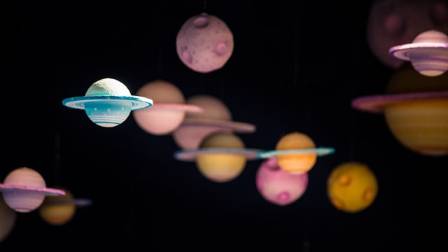
Our cosmic neighborhood is far more than just the sun and eight familiar planets. It is a vast expanse filled with icy comets, wandering asteroids, dwarf planets, and moons that defy imagination. While we have learned much since the dawn of the space age, the solar system continues to surprise us with phenomena that challenge our scientific understanding. From volcanoes that spew ice on Pluto to canyons on Mars that could span the entire United States, here are some of the most remarkable facts about our corner of the universe.
The Immense Scale of the Solar System
The true size of the solar system is difficult to comprehend. NASA’s Voyager 1, launched in 1977, took until 2012 to cross the heliopause—the boundary where the sun’s magnetic field and particle flow fade into the interstellar medium. However, even this incredible distance is just the beginning. If the solar system is defined as everything that orbits our star, Voyager 1 will not truly leave its confines until it exits the Oort Cloud, a journey that will take another 14,000 to 28,000 years.
A Surprising Cosmic Alignment
To visualize the vastness of the space between Earth and its moon, consider this: every single planet in our solar system could fit within that gap. Although the distance fluctuates, at its average separation, the eight major planets could be lined up pole-to-pole between us and the moon with room to spare. This perspective highlights just how much empty space exists even in our immediate vicinity, given that the distance to the sun is another 390 times greater than the distance to the moon.
The Sideways Rotation of Uranus
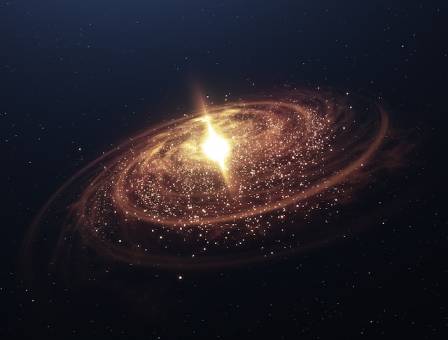
Most planets spin like upright tops as they orbit the sun, but Uranus is a major exception. It rotates on its side at an angle of roughly 90 degrees, appearing to roll along its orbital path. Astronomers believe this strange orientation is the result of a massive collision with a protoplanet in the distant past. This tilt results in extreme seasonal shifts where each pole experiences 21 years of continuous sunlight followed by 21 years of total darkness.
The Volcanic Chaos of Io
Jupiter's moon Io is the most geologically active body in our solar system. Unlike Earth’s moon, Io is covered in hundreds of active volcanoes that blast plumes of sulfur 190 miles into space. This constant eruption is fueled by "tidal heating"—the moon is caught in a gravitational tug-of-war between Jupiter and other large moons, causing its interior to flex and generate immense heat.
The Solar System’s Largest Volcano
Mars is home to Olympus Mons, a shield volcano so massive it dwarfs any mountain on Earth. It stands 16 miles high—nearly triple the height of Mount Everest—and spans an area comparable to the state of Arizona. This gargantuan size was made possible by the low Martian gravity and the lack of moving tectonic plates, allowing the volcano to remain over a single "hot spot" for millions of years.
The Grandest Canyon in the Neighborhood
While the Grand Canyon on Earth is a natural wonder, it is tiny compared to Mars’ Valles Marineris. This canyon system is over 2,500 miles long, which is roughly ten times the length of the Grand Canyon and long enough to stretch across the entire United States. Scientists believe it formed as a giant crack in the crust, further carved by ancient water flow and glaciers.
The Super-Rotating Winds of Venus
Venus is often described as a hellish twin of Earth, with surface temperatures hot enough to melt lead. However, its atmosphere is equally extreme. The upper winds of Venus move 50 times faster than the planet’s own rotation, creating a phenomenon known as super-rotation. These hurricane-force winds have actually been observed getting stronger over the past several decades.
The Ubiquity of Water
Water was once thought to be rare in space, but we now know it is everywhere. Ice can be found in the shadowed craters of Mercury, at the poles of Mars, and throughout the moons of the outer gas giants. Jupiter's moon Europa is of particular interest to astrobiologists, as it likely harbors a liquid water ocean beneath its icy crust containing twice the volume of all Earth’s oceans combined.
Reaching Every Major Planet
Humanity has achieved the incredible feat of sending robotic explorers to every major planet in the solar system. From the searing heat of Mercury to the frozen reaches of Neptune, spacecraft have provided close-up imagery and data for all eight planets and even dwarf planets like Pluto and Ceres. The Voyager missions remain the most prolific, utilizing a rare planetary alignment to visit all four gas giants in a single decade.
The Risk of Cosmic Contamination
As we discover microbes on Earth that thrive in extreme environments like volcanic vents, the possibility of life on other planets becomes more plausible. This has led to strict "planetary protection" protocols. To avoid contaminating potentially habitable worlds with Earthly bacteria, NASA intentionally crashed the Galileo spacecraft into Jupiter at the end of its mission rather than risk a collision with the moon Europa.
The Ongoing Contraction of Mercury
Mercury, already the smallest major planet, is still shrinking. Images from the MESSENGER spacecraft revealed small, cliff-like ridges known as fault scarps across the surface. These geological features indicate that the planet is contracting as its iron core slowly cools, a process that continues billions of years after its formation.
The Mountains of Pluto
When New Horizons flew past Pluto in 2015, it revealed a world far more complex than a simple frozen rock. The spacecraft captured images of towering mountains made of water ice rising 11,000 feet into the sky. Their existence suggests that Pluto was geologically active relatively recently, though the source of the heat required for such activity remains a mystery.
Pluto’s Layered Atmosphere
Pluto also possesses a surprisingly deep and complex atmosphere. It features a blue haze that extends 1,000 miles above the surface, organized into roughly 20 distinct layers of nitrogen and other gases. Despite being much smaller than Earth, Pluto manages to maintain this atmosphere through geological processes that resupply the nitrogen lost to space.
Planetary Rings are Commonplace
While Saturn is famous for its dazzling ring system made of reflective ice, it is not the only planet with rings. All four of the outer gas giants—Jupiter, Saturn, Uranus, and Neptune—possess rings. While the others are mostly composed of dark dust and rocky debris, even small asteroids like Chariklo have been discovered with their own miniature ring systems.
The Shrinking Great Red Spot
Jupiter’s Great Red Spot is a massive anticyclonic storm that has raged for at least 400 years. Recent observations have shown that this iconic feature is getting smaller. In the late 1800s, the spot was wide enough to fit three Earths across; today, it is only about 1.3 times the width of our planet and continues to contract.
Comets Found by Solar Observers
Most people expect comets to be found by stargazers looking into the night sky, but the Solar and Heliospheric Observatory (SOHO) has become the greatest comet hunter in history. While intended to study the sun, it has spotted over 2,400 "sungrazing" comets as they pass close to the solar disk, many of which are discovered by amateur volunteers analyzing satellite data.
The Search for Planet Nine
Mathematical evidence suggests a massive, undiscovered planet may be lurking far beyond the orbit of Neptune. This theoretical "Planet Nine" would explain the unusual orbital paths of distant objects in the Kuiper Belt. While it has not yet been seen, some scientists speculate it could be a massive planet or perhaps even a primordial black hole the size of a grapefruit.
The Internal Heat of Neptune
Neptune is the most distant planet from the sun, yet it is unexpectedly warm. It radiates significantly more heat than it receives from solar radiation—more so than its neighbor Uranus, which is closer to the sun. This internal energy drives the most violent winds in the solar system, which can reach speeds of 1,500 miles per hour.
The Changing Van Allen Belts
Earth is surrounded by two massive donuts of radiation known as the Van Allen Belts. These belts of trapped charged particles are highly dynamic, expanding and contracting based on solar activity. In 2013, researchers even discovered a temporary third belt that appeared during a period of intense space weather.
The Shattered Surface of Miranda
Uranus' moon Miranda looks like a jigsaw puzzle that was put together incorrectly. Its surface features a chaotic mix of deep canyons, terraced layers, and sharp ridges. One theory suggests the moon was shattered by a massive impact and reassembled by gravity, while others believe tidal forces from Uranus caused the interior to churn and erupt.
The Dual Faces of Iapetus
Saturn's moon Iapetus is famous for its "Yin-Yang" appearance. One half of the moon is as dark as charcoal, while the other is as bright as snow. This is likely due to a thermal feedback loop: dark dust on the leading side absorbs heat, causing ice to evaporate and settle on the colder, brighter side, further exaggerating the contrast.
The Methane Lakes of Titan
Saturn's largest moon, Titan, is the only place in the solar system besides Earth known to have a liquid cycle on its surface. However, it is far too cold for liquid water. Instead, Titan features clouds, rain, and vast lakes of liquid methane and ethane. Beneath this exotic surface, scientists believe there may be a deep, hidden ocean of liquid water.
Organic Molecules Across the System
Organic molecules, the carbon-based building blocks of life, are surprisingly common in space. They have been detected on the surface of comets, in the atmosphere of Titan, and in the soil of Mars. While their presence doesn't prove that life exists elsewhere, it shows that the necessary ingredients are widespread throughout the solar system.
Saturn’s Hexagonal Storm
At Saturn's north pole, there is a permanent weather pattern that defies easy explanation: a six-sided jet stream known as "the Hexagon." This massive storm is roughly 20,000 miles wide and has been observed for decades. Scientists believe the shape is created by a standing wave in the atmosphere caused by the planet's varying wind speeds.
The Mystery of the Solar Corona
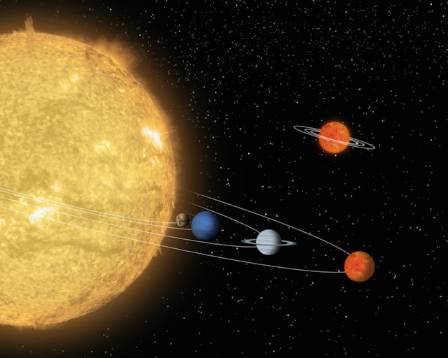
One of the greatest paradoxes in astronomy is the temperature of the sun's atmosphere. While the surface of the sun is about 10,000 degrees Fahrenheit, the outermost layer—the corona—reaches temperatures of millions of degrees. Scientists are currently using the Parker Solar Probe to determine if "heat bombs" caused by magnetic fields or plasma waves are responsible for this incredible energy boost.
यह भी पढ़ें

The Shocking Truth About The Ring Tailed Lemur
Pearson Daniel

Easy Beginner's Guide To Painting A Squirrel
Taylor Snow

Bridal Bouquet Style Guide
Tristan Hayes

स्मार्ट प्रौद्योगिकी के रुझान हमारे जीवन को कैसे बदल रहे हैं
विक्रम

Smart city
Ethan Joseph Anderson

10 Brilliant Ideas to Turn Small Dining Room Corners into Stunning Features
Ayla