विशेष लेख
The Legendary Evolution of Victoria Harbour and its Maritime Legacy
The earliest records identifying the body of water now recognized as Victoria Harbour appear in maritime charts created for the navigation of the Chinese coastline around the year fourteen twenty-five, documented within a comprehensive treatise on military technology dating from the seventeenth century. While various nautical charts depicted the region in subsequent eras, the first detailed map of the area was produced in eighteen hundred and ten by lieutenants associated with the Bombay Marine for the East India Company. By the middle of the nineteenth century, the harbor became a focal point for social and athletic gatherings. Members of the city's premier athletic organization inaugurated a variety of aquatic competitions, including swimming events and water polo matches, establishing a tradition of marine engagement that flourished within the bustling port.
Damian Holloway
लेखक
लेख परिचय
नीचे पूरा लेख पढ़ें।
अनुभाग
समाचार
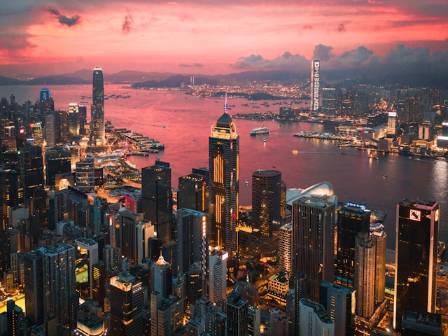
The earliest records identifying the body of water now recognized as Victoria Harbour appear in maritime charts created for the navigation of the Chinese coastline around the year fourteen twenty-five, documented within a comprehensive treatise on military technology dating from the seventeenth century. While various nautical charts depicted the region in subsequent eras, the first detailed map of the area was produced in eighteen hundred and ten by lieutenants associated with the Bombay Marine for the East India Company. By the middle of the nineteenth century, the harbor became a focal point for social and athletic gatherings. Members of the city's premier athletic organization inaugurated a variety of aquatic competitions, including swimming events and water polo matches, establishing a tradition of marine engagement that flourished within the bustling port.
Political Turbulence and Strategic Renaming
During the turbulent era of the Taiping Rebellion, the harbor became an arena for international tensions and political maneuvering. Armed insurgents frequently marched through local streets, leading to law enforcement interventions, including the arrest of militants planning assaults on nearby defensive strongholds. By the middle of the eighteen-fifties, naval vessels associated with the rebellion threatened to engage in direct combat with imperial defensive ships within the port, compelling British colonial officials to intervene. This period of instability foreshadowed larger military conflicts that would soon follow. Originally known simply as the Hong Kong Harbour, the waters were eventually rechristened as Victoria Harbour, serving as a strategic sanctuary for the British fleet and honoring the reigning monarch of the era.
Industrial Growth and Environmental Consequences
The rise of the manufacturing sector during the nineteen-seventies brought unprecedented economic prosperity but simultaneously introduced significant environmental degradation to the waterway. The intensity of industrialization led to the cessation of organized water sports in nineteen seventy-three, a direct consequence of the deteriorating water quality. This environmental decline occurred in tandem with high-profile maritime disasters, including the catastrophic fire and subsequent sinking of a massive ocean liner at its anchorage. Scientific investigations conducted over subsequent decades revealed that the harbor suffered from severe nitrogen saturation, caused primarily by long-term effluent discharges flowing from the regional river delta into the coastal waters.
Reclamation Projects and Public Preservation Movements
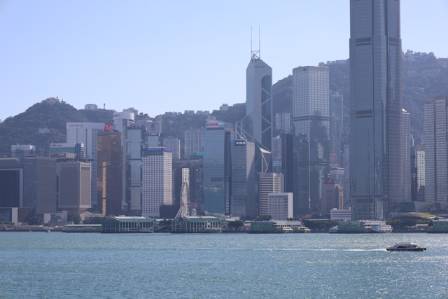
Following the publication of an extensive development feasibility study in nineteen eighty-nine, municipal planners proposed a series of strategic reclamation initiatives intended to expand usable land area through three distinct urban development zones. However, the subsequent proposals to extend the waterfront along the coast met with intense public scrutiny and opposition. Citizens increasingly viewed the waterway not merely as a commercial thoroughfare but as a vital cultural asset. Environmental activists and concerned non-governmental organizations formed coalitions to challenge governmental strategies that threatened to shrink the waterbody, arguing that the harbor remained a precious national legacy that required protection for future generations. This grassroots movement against territorial expansion also highlighted public dissatisfaction regarding the destruction of significant historic piers and structures that served as cultural landmarks for the local community.
Aviation History and Maritime Incidents
The maritime history of the area also includes moments of significant aviation distress. In the early nineteen-nineties, a commercial airliner attempting a landing during adverse weather conditions at the city's former international airport overshot the runway. The unfortunate event resulted in the aircraft coming to rest within the waters of the harbor, marking a somber chapter in the operational history of aviation near the coastal waterway.
यह भी पढ़ें

The Best Salt Flats From Around the World
Chloe Harrington

बेहतरीन आभूषणों का शाश्वत आकर्षण: सोने के पेंडेंट और अंगूठियां
राजन गुरुंग
दुनिया के 10 मनमोहक झूले जहाँ नज़ारे लुभाते हैं
विक्टोरिया
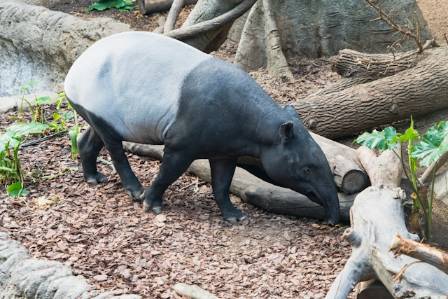
Understanding the Tapir: Eight Intriguing Realities of a Living Fossil
Natalie Brooke Simmons

67 मिलियन वर्ष पुराना, अब तक पाया गया सबसे पुराना आधुनिक पक्षी प्राकृतिक 'टर्डकन' है
दीपक

6 Best Sofa Placement Ideas to Maximize Comfort and Style in Your Living Room
Kate