विशेष लेख
Understanding the Tapir: Eight Intriguing Realities of a Living Fossil
The tapir is among the most peculiar-looking mammals on the planet, often described as a visual blend of a wild pig and an elephant. In Thailand, the local name for the creature literally translates to "mixture is finished," reflecting the folklore that it was created from the remaining parts of other animals. Despite their patchwork appearance, tapirs are highly specialized survivors that have outlasted many other prehistoric species, though they now face an uncertain future.
Natalie Brooke Simmons
लेखक
लेख परिचय
नीचे पूरा लेख पढ़ें।
अनुभाग
समाचार
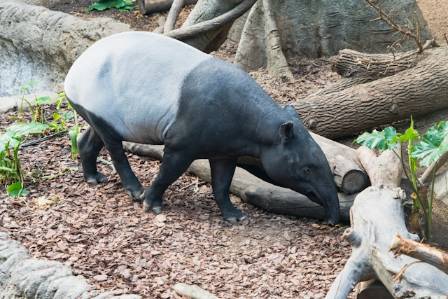
The tapir is among the most peculiar-looking mammals on the planet, often described as a visual blend of a wild pig and an elephant. In Thailand, the local name for the creature literally translates to "mixture is finished," reflecting the folklore that it was created from the remaining parts of other animals. Despite their patchwork appearance, tapirs are highly specialized survivors that have outlasted many other prehistoric species, though they now face an uncertain future.
A Legacy Spanning Millions of Years
Often referred to as "living fossils," tapirs have remained largely unchanged for approximately 20 million years. While the four existing species are now located in Southeast Asia, Central America, and South America, their ancestors first appeared in North America during the Eocene epoch. Fossil records indicate that these primitive mammals have maintained their basic form since the Early Oligocene, making them a direct link to the Earth's ancient past.
Surprising Family Connections
Because of their physical traits, tapirs are frequently compared to pigs, anteaters, or elephants. However, biologically, they belong to the order Perissodactyla, or odd-toed ungulates. This means their actual closest living relatives are rhinoceroses, horses, and zebras. Like their kin, tapirs are herbivores that rely on specialized hooves and digestive systems to navigate their environments.
Survival Tactics of the Young
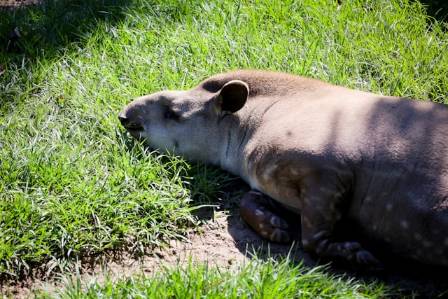
While adult tapirs have a rugged, somewhat unusual look, their offspring are strikingly different. Tapir calves are covered in a vibrant pattern of white stripes and spots, resembling a cross between a piglet and a fawn. This coloration serves as vital camouflage; in the shaded forests where they are born, the patterned coat mimics the dappled sunlight hitting the forest floor, allowing the vulnerable young to hide from predators.
The Versatile Prehensile Snout
The most distinct feature of the tapir is its elongated, flexible snout. This proboscis is prehensile, meaning it can grip and manipulate objects similarly to an elephant's trunk. Tapirs utilize this tool to pluck leaves and fruit from branches that would otherwise be out of reach. When searching for food, they can extend and wrap their nose around specific morsels to pull them directly into their mouths.
Mastery of Aquatic Environments
Tapirs are highly proficient swimmers and frequently take to the water to forage for aquatic vegetation. Their underwater capabilities are remarkable; they are known to walk along the floors of lakes and rivers at a brisk pace. When threatened by land predators, a tapir will submerge itself completely, using its long snout as a snorkel to breathe while remaining hidden beneath the surface.
Dietary Habits and Ecological Impact
An adult tapir is a voracious herbivore, capable of consuming up to 75 pounds of vegetation in a single day. Their diet consists of a wide variety of land and water plants, including berries, fruits, and leaves. By traveling along established foraging routes, they act as "gardeners of the forest." As they consume fruit in one area and defecate in another, they disperse seeds across vast distances, which is essential for maintaining the genetic health and diversity of their jungle habitats.
Variation in Size and Species
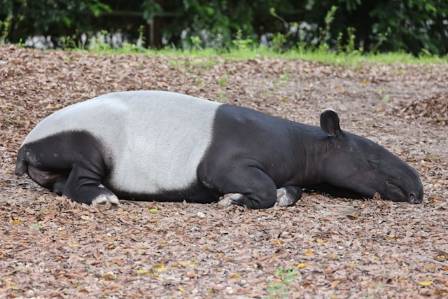
There are four primary species of tapir: the Malayan tapir, the Mountain tapir, Baird’s tapir, and the Lowland tapir. The Malayan tapir is the largest of the group, easily identified by its distinct black-and-white coloration. Found in Sumatra and Malaysia, these giants can weigh as much as 800 pounds. In South America, the lowland tapir holds the record for the largest land mammal on the continent.
Current Conservation Challenges
Every species of tapir currently faces significant survival threats. The International Union for Conservation of Nature (IUCN) classifies the Malayan, mountain, and Baird’s tapirs as Endangered, while the lowland tapir is listed as Vulnerable. Their populations are being pressured by habitat fragmentation, human encroachment, and hunting. Protecting these ancient creatures requires a global effort to preserve rainforests and prevent poaching to ensure they do not disappear after millions of years of successful existence.
यह भी पढ़ें

दुनिया के शीर्ष दस सर्फिंग स्थल
प्रिया

Advanced Robotics in 2025: Groundbreaking Breakthroughs, Industry Transformations, and the Future of Human-Robot Collaboration
Mia Davis

Textured Landscapes Painting
Reese Harper

टेनिस मजेदार होने के 9 कारण
आदित्य

प्रसिद्ध पास्ता के आकार और उनकी कहानियाँ
रूद्र

घर पर आसानी से बनने वाला स्ट्रॉबेरी दाइफुकु: एक बेहतरीन जापानी मिठाई बनाने की विधि
जसविंदर संधू