विशेष लेख
Textured Landscapes Painting
When it comes to painting landscapes, creating a sense of realism and depth often hinges on how you depict the textures found in nature—whether it’s the rugged bark of a tree, the soft sway of grass, or the glimmering surface of a pond.
Reese Harper
लेखक
लेख परिचय
नीचे पूरा लेख पढ़ें।
अनुभाग
समाचार
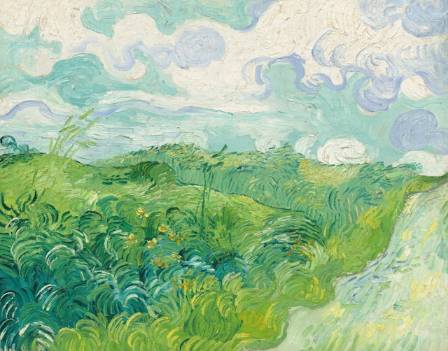
When it comes to painting landscapes, creating a sense of realism and depth often hinges on how you depict the textures found in nature—whether it’s the rugged bark of a tree, the soft sway of grass, or the glimmering surface of a pond.
Understanding which brushes to choose and how to use them creatively is key to mastering these textures. In this guide, we’ll explore how different brushes and techniques can help you render natural elements in textured, engaging acrylic landscapes.
Why Texture is Important in Landscape Art
Texture does more than please the eye—it tells a story. Layering and varying textures can guide the viewer’s gaze, evoke mood, and make your scene feel immersive. The right technique can make a meadow appear breezy, a forest dense and mysterious, or a river crisp and flowing—all through the way you handle paint.
Choosing the Right Brushes for Texture
To convey natural textures convincingly, you’ll want a selection of brushes, each offering different effects:
1. Fan Brushes
Best for: Grassy fields, pine needles, wispy clouds, and foliage layers.
Effect: Multiple lines in a single stroke that imitate the irregularity of natural growth.
2. Filbert Brushes
Best for: Tree canopies, smooth stones, and soft petals.
Effect: Rounded, blended shapes with gentle transitions for a natural look.
3. Flat Brushes
Best for: Wide skies, water reflections, and blocky rock forms.
Effect: Clean, even coverage or sharp lines for structured textures.
4. Round Brushes
Best for: Branches, stems, and small details.
Effect: Fine points for detail or broad strokes when pressed, offering versatility.
5. Palette Knives
Best for: Bark, rugged terrain, impasto highlights.
Effect: Thick, tactile marks that add dimension and roughness.
6. Stippling Brushes or Deerfoot Stipplers
Best for: Shrubs, dense foliage, or gravel paths.
Effect: Natural, dappled textures through repeated tapping.
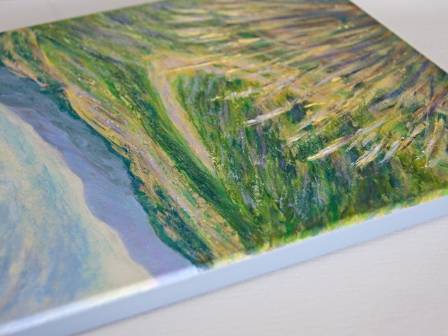
Techniques for Rendering Natural Textures
1. Layering to Build Depth
Begin with a large flat or filbert brush for the background, then layer progressively with smaller brushes and drier paint to create midground and foreground detail. This builds the illusion of depth and tactile texture.
2. Dry Brushing
Drag a nearly dry fan or flat brush lightly over dry paint to create scratchy textures—perfect for weathered wood, rough rocks, or windswept grass.
3. Stippling & Tapping
Hold a round brush or stippler upright and dab to create foliage, wildflowers, or bark textures. Vary the colors and density for a more natural effect.
4. Scumbling & Scraping
Use a stiff brush or palette knife to apply broken, light layers over dried paint. This works well for rocky surfaces or sparkling water.
5. Edge Work
Use the corner or side of a filbert or flat brush for crisp edges—ideal for silhouetted leaves, branches, or jagged mountain ridges.
Example: Painting a Forest with Texture
Background Sky: Smoothly blend with a flat or filbert brush.
Trunks & Large Foliage: Block in with flats, then add bark texture with a palette knife.
Leaves & Underbrush: Layer fan or stippling strokes with different greens for dense, leafy coverage.
Finishing Touches: Highlight with a dry brush or knife edge, and use a small round brush for twigs and grass tips.
Conclusion: Experiment and Discover
Every element of nature—trees, stones, grass, clouds—has its own texture and rhythm. By combining brushes and varying techniques, you can bring these qualities to life in your acrylic landscapes. With practice, your paintings will not only capture the scene but also the tactile essence of nature itself.
Enhance your landscape paintings with URARTSTUDIO’s range of brushes and art tools. Explore our step-by-step tutorials and tips to elevate your skill in painting textures and portraying the beauty of the natural world.
यह भी पढ़ें
दुनिया के शीर्ष 10 सबसे लंबे समुद्री पुल
दिव्यांशी
संयुक्त राज्य में अविस्मरणीय मार्ग
विद्या
Best and Worst Fish for Your Health: A Comprehensive Guide to Seafood Choices
Evelyn
दुनिया की 6 सबसे ऊंची समुद्री चट्टानों से नज़ारा देखें
अंजली
Our Top 10 Best Color Palettes
Ryan Baker
The Trendiest Earrings You Absolutely Must Have
Jack Hunter