विशेष लेख
An Overview of the Hawfinch: Nature’s Powerful Seed-Cracker
The Hawfinch (Coccothraustes coccothraustes) is a robust member of the finch family, distinguished by its massive beak and incredible jaw strength. This bird is uniquely adapted to crush hard fruit stones, such as cherry pits, which remain inaccessible to most other avian species. Despite its striking appearance, the Hawfinch is famously shy and often remains hidden within the high canopies of mature forests.
Mia Alexandra Hayes
लेखक
लेख परिचय
नीचे पूरा लेख पढ़ें।
अनुभाग
समाचार
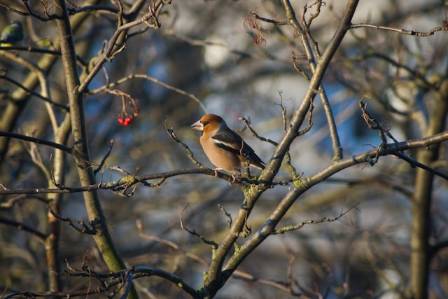
The Hawfinch (Coccothraustes coccothraustes) is a robust member of the finch family, distinguished by its massive beak and incredible jaw strength. This bird is uniquely adapted to crush hard fruit stones, such as cherry pits, which remain inaccessible to most other avian species. Despite its striking appearance, the Hawfinch is famously shy and often remains hidden within the high canopies of mature forests.
Physical Identification and Characteristics
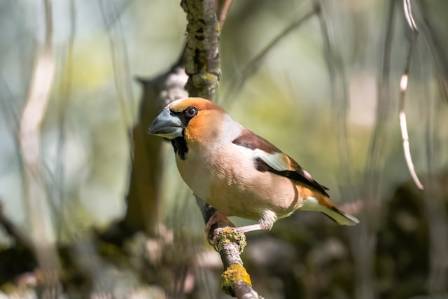
The Hawfinch is a stocky bird with a large, rounded head and a powerful conical bill. Its plumage is a rich palette of chestnut-brown on the head, a grey nape, and a distinctive black bib beneath the beak. The wings are particularly ornate, featuring white patches and deep blue-black flight feathers that are visible during its characteristic undulating flight.
While males and females share similar coloration, the male typically displays brighter tones. The bird's bill serves as a seasonal indicator, transitioning from a metallic blue-grey during the spring breeding months to a horn-colored hue in the winter. Measuring between 16.5 and 18 centimeters in length with a wingspan of up to 33 centimeters, it is a substantial finch, weighing between 48 and 62 grams.
Habitat and Global Distribution
These birds are primarily found in mature deciduous and mixed woodlands across Europe and parts of Asia. They show a strong preference for forests containing trees like hornbeam, beech, and oak, which provide their primary food sources. While many populations are resident year-round, northern groups often migrate southward during the winter months.
In the United Kingdom, they are most prevalent in Wales and southern England. Although their global population is currently increasing, they have become quite scarce in certain local regions. They are capable of living in various elevations, ranging from sea level up to 2,000 meters, typically favoring temperate or subtropical climates.
Dietary Habits and Specialized Behavior
The diet of a Hawfinch consists mainly of tree seeds and the kernels found inside hard fruit stones. Their specialized bill can exert a crushing force of up to 50 kilograms, allowing them to split open stones that are otherwise impenetrable. This process often produces a sharp cracking sound that can be heard from a distance.
In addition to seeds, Hawfinches consume buds, shoots, and occasionally insects, particularly during the breeding season to provide protein for their young. During the winter, they may occasionally visit garden feeders to consume sunflower seeds. Their behavior is generally elusive; they prefer to stay perched high in the foliage, moving in small groups or pairs.
Vocalization and Communication
Despite its size and strength, the Hawfinch is relatively quiet. Its most frequent call is a sharp, metallic "tick" or "pix." Its song is inconspicuous and rarely heard, consisting of a quiet, warbling series of notes. When in flight, they occasionally emit a soft, high-pitched "seep" sound to communicate with others in their group.
Reproduction and Life Cycle
Hawfinches are monogamous and begin their breeding season in late April. The male performs courtship displays by puffing out his feathers and taking short, demonstrative flights. Nests are typically constructed high in trees using twigs, roots, and hair. A female will lay between three and five pale blue or green eggs, which she incubates for approximately 11 to 13 days.
Both parents share the duty of feeding the nestlings. While the young fledge after about two weeks, they remain dependent on their parents for several more weeks to learn the skills necessary for survival. In the wild, a Hawfinch generally lives between five and ten years, though they must stay vigilant against predators such as sparrowhawks, goshawks, and nest-raiders like squirrels and jays.
Conservation Status
Globally, the Hawfinch is classified as a species of "Least Concern," with a mature population estimated between 10 million and 20 million individuals. However, local declines in places like the UK have sparked conservation concern. The primary threats to the species include the loss of mature woodland and the fragmentation of their specialized habitats. Current conservation strategies focus on the preservation and management of ancient forests to ensure these powerful finches continue to thrive.
यह भी पढ़ें

चाँद पर हमारे पहले पदचिह्न बनाए हुए 47 साल हो गए हैं — यहाँ वह बातें हैं जो आप पृथ्वी के धूल भरे साथी के बारे में नहीं जानते होंगे
सिद्धार्थ

Cheesy Vegetable Medley
Elijah Moore
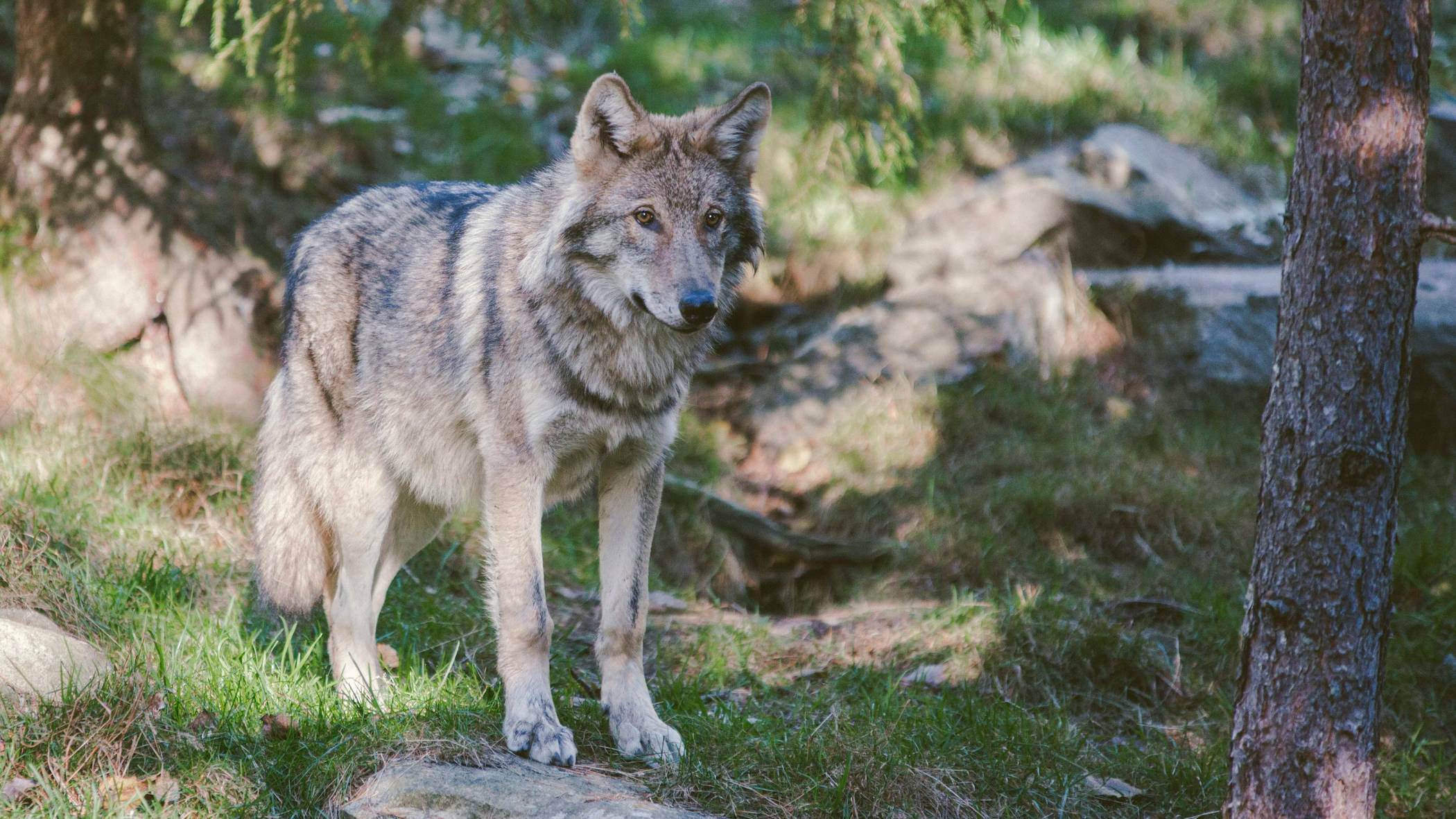
एक भेड़िया कितनी तेजी से दौड़ सकता है - (भेड़ियों के प्रकार और उनकी गति)
आरती

दुनिया भर में टॉप 3 बेहतरीन आलू चिप ब्रांड्स
कृति
An Overview of the Redshank: Characteristics and Habitat
Zachary Hollis
The Lone Tree of Lake Vrnwy
Ava Collins