← मुखपृष्ठ4 मिनट का पाठ
विशेष लेख
The Greenest Giants: How 10 Metropolises Are Merging Forests with Skyscrapers
Cities around the world are leading the charge towards a more sustainable future, implementing innovative strategies to reduce their environmental footprint. Here are some of the frontrunners in green urban living.
E
Ellie Cox
लेखक
लेख परिचय
नीचे पूरा लेख पढ़ें।
अनुभाग
समाचार
Cities around the world are leading the charge towards a more sustainable future, implementing innovative strategies to reduce their environmental footprint. Here are some of the frontrunners in green urban living.
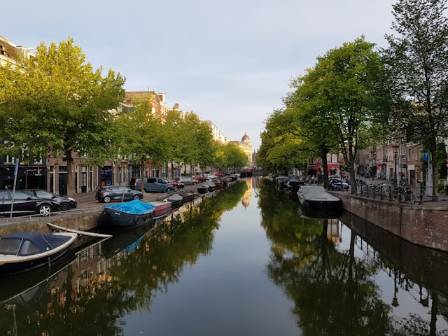
Amsterdam, The Netherlands
With a goal to become fully carbon-neutral by 2050, Amsterdam has made substantial progress in recent years. The city center now functions as a low-emissions zone, prohibiting the most polluting vehicles and imposing significant fines on violators. Furthermore, a city-wide initiative is underway to eliminate natural gas and fossil fuels, with the target of making all buildings carbon-neutral and free from natural gas by 2040.
Vancouver, Canada
In 2009, Vancouver launched an ambitious strategy to transform itself into the world's greenest city. While not every target was fully realized, the city made notable advances. A key achievement is the Vancouver Convention Centre, which features a living roof and its own water treatment plant. It earned the distinction of being the first building globally to receive two LEED (Leadership in Energy & Environmental Design) platinum certifications, a prestigious recognition for environmentally sound architecture.
Singapore
Singapore's commitment to enhancing urban life through nature is exemplified by the Supertree Grove in its Bay South Garden. This iconic landmark features 18 man-made trees that serve as vertical gardens, ranging from 25 to 50 meters in height. These structures host more than 200 varieties of rare plants and are equipped with solar cells to power their evening illumination. They also collect rainwater, which is used for irrigation, as part of a broader strategy to integrate greenery into the city's core.
Oslo, Norway
Recognized as the European Green Capital in 2019 by the European Commission, Oslo has demonstrated a strong commitment to environmental progress. The Vulkan neighborhood, developed on a former industrial site, showcases this approach with its geothermal wells and extensive solar panels. The city boasts an exceptional public transport network of trams, buses, and a metro system, complemented by numerous bike rental options. Remarkably, nearly half of Oslo's area consists of parks, lakes, and over a million trees.
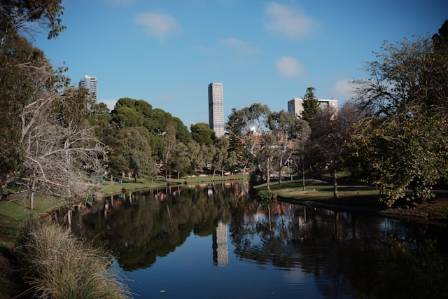
Adelaide, Australia
Located in Australia's driest state, Adelaide has adopted a comprehensive "water-sensitive" policy. This involves managing the entire water cycle to minimize waste and maximize water recycling for irrigation, reducing dependence on reservoirs. The city has also invested significantly in greening its urban landscape, with careful planning to ensure newly planted trees have ample space to grow without interfering with underground utilities.
Wellington, New Zealand
A central part of Wellington's goal to achieve net-zero emissions by 2050 is the restoration of its native ecosystems. The region's biodiversity has diminished over time, with forest cover dropping from 98% before human settlement to just 28% today. The city is now focusing on conservation efforts and public education to protect its unique native species and reverse this decline.
Curitiba, Brazil
A long-standing pioneer in eco-friendly urban policy, Curitiba introduced its innovative Bus Rapid Transit (BRT) system in the 1970s. During a period of rapid expansion, the city chose to prioritize high-capacity bus transport over private car use. This model has since been successfully replicated worldwide. The system's distinctive tube-shaped stations, introduced later, have become an iconic symbol of the city.
Copenhagen, Denmark
Copenhagen aspires to become the world's first carbon-neutral capital by 2025. The city is famous for its cycling culture, facilitated by its flat terrain and extensive infrastructure like dedicated bike lanes. Bicycles account for nearly half of all commutes to work or school. Beyond transport, the city is also leveraging renewable energy and emerging carbon capture technologies to cut emissions.
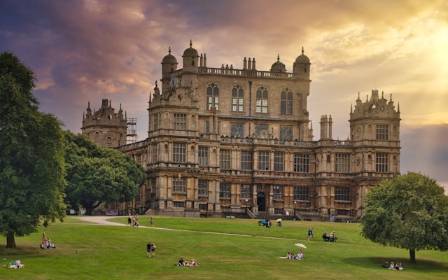
Nottingham, UK
Nottingham has set an ambitious target to be the UK's first carbon-neutral city by 2028. The city council is exploring cutting-edge solutions, such as the UK's first trial of wireless charging for electric vehicles in 2022. Another initiative, 'Hello Nottingham', uses QR codes placed around the city to gather public feedback on how different areas can be enhanced to fight climate change.
Reykjavik, Iceland
A long-time leader in renewable energy, Reykjavik is the first city in the world to be entirely powered by geothermal and hydroelectric sources. Building on this achievement, the city now aims to become carbon-neutral by 2040. A key part of this plan involves transitioning all public transport and private vehicles away from fossil fuels in the coming years.
यह भी पढ़ें

hi
घने जंगलों में छिपे आकर्षक जीवंत पुल
पद्मा

en
Identifying White Herons: A Comprehensive Guide
Laura White

en
6 Things to Consider to Choose the Perfect Two-Seater Sofa for Small Spaces
Norma

en
Fresh Mango Cream Japanese Cake Roll
Isadora Vale
hi
1994 सुपरट्यूनर शोडाउन: आफ्टरमार्केट मॉन्स्टर्स
श्रेयस्

hi
कूपे को समझना: स्टाइल और परफॉर्मेंस के लिए एक गाइड
विशाल मंगल