विशेष लेख
Exploring the Milky Way
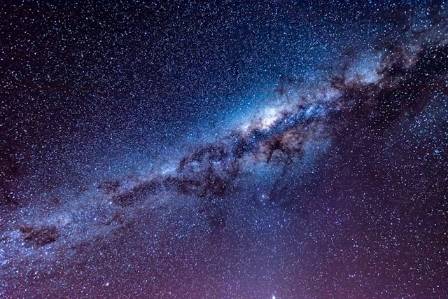
On a dark, clear evening away from artificial lights, a soft band of silvery light can often be seen stretching across the heavens. For countless generations, people looked upon this celestial glow with awe and imagination. Different civilizations created legends to explain its presence, viewing it as a heavenly pathway, a river in the sky, or a trail left by divine beings. Modern astronomy has revealed the truth: this glowing band is our own galaxy.
Hazel Grant
लेखक
लेख परिचय
नीचे पूरा लेख पढ़ें।
अनुभाग
समाचार
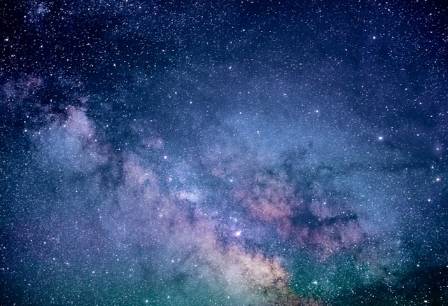
On a dark, clear evening away from artificial lights, a soft band of silvery light can often be seen stretching across the heavens. For countless generations, people looked upon this celestial glow with awe and imagination. Different civilizations created legends to explain its presence, viewing it as a heavenly pathway, a river in the sky, or a trail left by divine beings. Modern astronomy has revealed the truth: this glowing band is our own galaxy.
The Milky Way is far more than a random gathering of stars. It is an immense galactic system filled with hundreds of billions of suns, enormous clouds of gas and dust, vast quantities of dark matter, and likely billions of planets. Within one of its spiral arms lies our solar system, quietly circling the galaxy’s center as part of an extraordinary cosmic voyage.
Studying the Milky Way helps us understand not only our place in the universe but also the processes that create stars, planets, and galaxies. It tells the story of cosmic evolution spanning billions of years and reveals the mechanisms that shaped the universe we see today.
What Is the Milky Way?
The Milky Way is a huge barred spiral galaxy that contains the Sun, Earth, and countless other stellar systems. Because we are located inside its disk, it appears from Earth as a diffuse band of light crossing the night sky.
The galaxy is unimaginably large. Its diameter is estimated to be approximately 100,000 light-years. Since a light-year represents the distance light travels in one year—about 9.46 trillion kilometers—light itself would require 100,000 years to journey from one edge of the galaxy to the other.
Scientists estimate that the Milky Way contains somewhere between 100 billion and 400 billion stars. Many of these stars are believed to host planets, suggesting that our galaxy may contain billions of planetary systems.
The term “Milky Way” originated from the ancient Greek phrase meaning “milky circle.” In fact, the word “galaxy” comes from the same linguistic root.
For most of human history, the Milky Way remained a mystery. It appeared simply as a glowing cloud across the sky, and its true nature was unknown.
Uncovering the Nature of the Milky Way
A major breakthrough came in 1610 when Italian astronomer Galileo Galilei used one of the earliest telescopes to examine the Milky Way.
What appeared to the naked eye as a cloudy streak turned out to be a vast collection of individual stars. The glow was actually the combined light of countless distant suns.
Over the next several centuries, astronomers worked to determine the galaxy’s shape and structure. This was not easy because we are located inside it. Understanding the Milky Way from within is similar to trying to determine the shape of a forest while standing among the trees.
As observational technology improved during the twentieth century, astronomers measured distances to stars and star clusters more accurately. These studies revealed that the Milky Way is a rotating spiral galaxy featuring a central bulge and sweeping spiral arms.
Another revolutionary discovery came when astronomer Edwin Hubble demonstrated that many objects once thought to be nearby nebulae were actually separate galaxies located far beyond the Milky Way.
This realization transformed our understanding of the universe. The Milky Way was no longer considered the entire cosmos but merely one galaxy among billions.
The Structure of the Galaxy
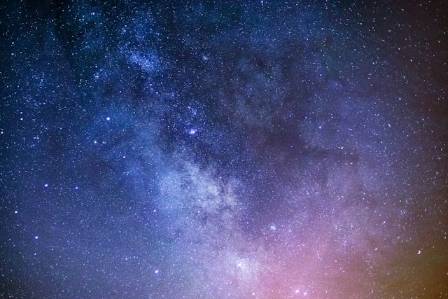
The Milky Way consists of several major components.
At its center is the galactic bulge, a dense concentration of stars packed into a roughly spherical shape. Surrounding this region is the galactic disk, where most of the galaxy’s gas, dust, and star-forming activity are found.
Although the disk spans tens of thousands of light-years, it is relatively thin compared to its enormous width, measuring only about 1,000 light-years thick in many areas.
Spiral arms extend outward from the central regions. These arms are not fixed structures but areas where stars, gas, and dust are more densely concentrated. They serve as major sites of star formation.
Encircling the entire system is the galactic halo, a vast spherical region containing ancient stars, globular clusters, and a large amount of dark matter.
Like a giant cosmic carousel, the Milky Way slowly rotates. Stars orbit around the galactic center, including our own Sun.
A complete orbit of the solar system around the galaxy takes approximately 230 million years, a period often called a galactic or cosmic year.
Our Location in the Milky Way
Humanity does not occupy a special position within the galaxy.
The solar system resides in a smaller spiral feature known as the Orion Arm, or Orion Spur. This region is located roughly 26,000 light-years from the galactic center.
The Sun travels around the galaxy at an astonishing speed of about 220 kilometers per second. Even at that velocity, completing a single orbit requires hundreds of millions of years.
When dinosaurs dominated Earth, our solar system was located in a very different section of its galactic journey.
Fortunately, our region of the Milky Way is relatively peaceful compared with the crowded and energetic areas closer to the center. This stability may have contributed to the long-term development of life on Earth.
The Heart of the Galaxy
At the core of the Milky Way lies one of the most extraordinary objects known to science: a supermassive black hole called Sagittarius A*.
This object contains a mass approximately four million times greater than that of the Sun.
Although black holes emit no visible light, astronomers can detect their presence by observing nearby stars. The stars closest to Sagittarius A* move at tremendous speeds, revealing the existence of an extremely powerful gravitational source.
Modern observations have even produced images showing the shadow of this black hole, confirming predictions made by theoretical physics.
Compared with some supermassive black holes in other galaxies, Sagittarius A* is relatively quiet, though it occasionally consumes nearby material and releases bursts of energy.
The Stars of the Milky Way
The Milky Way contains a remarkable variety of stars.
Some are enormous and burn through their fuel quickly, ending their lives as spectacular supernova explosions. Others are tiny red dwarfs that may continue shining for trillions of years.
The Sun belongs to the category of medium-sized stars and is considered fairly typical.
The galaxy also contains neutron stars, white dwarfs, and stellar black holes, which represent different stages of stellar evolution.
New stars are born within giant molecular clouds composed of cold gas and dust. Under the influence of gravity, regions within these clouds collapse and ignite, creating new stellar systems.
These stellar nurseries often produce hundreds or thousands of stars at once, forming clusters that slowly disperse over time.
Every star contributes to the ongoing story of the galaxy.
Planets Throughout the Galaxy
For centuries, nobody knew whether planets existed around other stars.
Today, astronomers have discovered thousands of exoplanets orbiting stars throughout the Milky Way.
These worlds come in many forms. Some are giant gas planets larger than Jupiter, while others are rocky bodies resembling Earth. Certain planets orbit extremely close to their stars, while others travel in distant, frigid regions.
Current estimates suggest there may be hundreds of billions of planets scattered throughout the galaxy.
Among these countless worlds could be many environments suitable for life.
Whether life exists elsewhere remains one of astronomy’s greatest unanswered questions.
The Mystery of Dark Matter
One of the Milky Way’s greatest puzzles involves a mysterious substance known as dark matter.
When astronomers studied how stars move around the galaxy, they found that visible matter alone could not explain their speeds. Something unseen was providing additional gravity.
Dark matter does not emit, absorb, or reflect light, making it invisible to telescopes. However, its gravitational influence can be measured.
Scientists believe the Milky Way is embedded within an enormous halo of dark matter that extends well beyond the visible galaxy.
Without dark matter, galaxies may not have formed or remained stable in the way they do today.
The Milky Way’s History and Destiny
The Milky Way has not always looked the way it does today.
Astronomers believe it began forming more than 13 billion years ago from smaller structures that gradually merged together.
Throughout its history, the galaxy has absorbed numerous smaller galaxies. Evidence of these ancient mergers can still be seen in streams of stars moving through the galactic halo.
The future of the Milky Way also includes dramatic change.
In approximately 4 to 5 billion years, it is expected to collide with the nearby Andromeda Galaxy.
This event will not involve widespread collisions between individual stars because they are separated by enormous distances. Instead, the two galaxies will slowly merge into a larger system over billions of years.
The resulting night sky would be an extraordinary sight.
The Milky Way in Human Culture
Long before astronomy explained its nature, the Milky Way occupied a special place in mythology and tradition.
In Greek mythology, it was associated with milk from the goddess Hera. Various Indigenous cultures viewed it as a pathway for spirits. In parts of Asia, it was seen as a celestial river separating lovers in the sky.
For travelers and sailors, the Milky Way also served as a natural guide during nighttime journeys.
Even today, seeing it stretch across a dark sky evokes wonder and reminds us of our connection to the universe.
Exploring Our Galaxy
Modern astronomers study the Milky Way using ground-based observatories and space telescopes.
Different wavelengths of light, including radio waves, infrared radiation, and X-rays, reveal regions hidden behind dense clouds of dust.
Space missions have mapped the positions and motions of billions of stars, allowing researchers to create increasingly detailed models of the galaxy’s structure.
Each new discovery helps scientists better understand how galaxies form, evolve, and interact over cosmic timescales.
Humanity’s Galactic Home
The Milky Way is our cosmic address.
Earth is not located at the center of the universe, nor is our solar system positioned at the center of the galaxy. Instead, we inhabit a small corner of an immense stellar metropolis containing hundreds of billions of suns.
Yet from this modest location, humanity has managed to uncover remarkable truths about the cosmos.
The Milky Way is more than a collection of stars. It is the environment that gave birth to our solar system, the source of the elements that make up our bodies, and the setting in which life emerged.
Every atom of carbon, oxygen, and iron within us was forged inside ancient stars that once lived and died somewhere in this galaxy. Those stars enriched space with heavy elements, making planets and life possible.
In a very real sense, we are part of the Milky Way itself.
We are made of stardust, living within a galaxy of stars, seeking to understand the vast cosmic home that surrounds us.
यह भी पढ़ें

1994 सुपरट्यूनर शोडाउन: आफ्टरमार्केट मॉन्स्टर्स
श्रेयस्

ऑफ-रोड लीजेंड का 2020 लैंड रोवर डिफेंडर के बारे में विवादास्पद विचार
वैभवी

पर्वतीय झीलों की निगरानी
चांदनी

Discover The Biggest RVs in the World
Sebastian Gray

कोआला के बारे में शीर्ष 10 तथ्य
चांदनी

The human figure in surrealism and abstract art
Emerson Lane