विशेष लेख
The human figure in surrealism and abstract art
The depiction of the human body has long been a cornerstone of artistic expression, evolving from the idealized proportions of classical sculpture to the symbolic and fragmented forms embraced by modern art. In the early 20th century, movements like surrealism and abstract art redefined how artists could portray the human figure, pushing the boundaries of representation and meaning. This article examines how these two influential movements transformed the human form, using it to explore psychological, emotional, and philosophical dimensions.
Emerson Lane
लेखक
लेख परिचय
नीचे पूरा लेख पढ़ें।
अनुभाग
समाचार
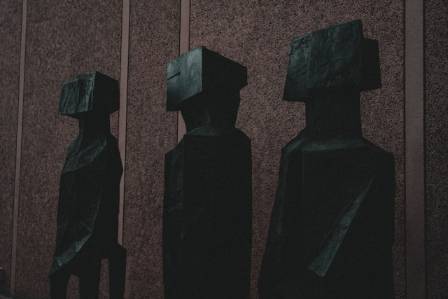
The depiction of the human body has long been a cornerstone of artistic expression, evolving from the idealized proportions of classical sculpture to the symbolic and fragmented forms embraced by modern art. In the early 20th century, movements like surrealism and abstract art redefined how artists could portray the human figure, pushing the boundaries of representation and meaning. This article examines how these two influential movements transformed the human form, using it to explore psychological, emotional, and philosophical dimensions.
Surrealism: Revealing the Subconscious
Surrealism, established by André Breton in the 1920s, aimed to unlock the mysteries of the unconscious mind. Inspired by Sigmund Freud’s theories of psychoanalysis, surrealist artists depicted dreams, irrational juxtapositions, and fantastical imagery, often using the human body as a medium to express these ideas.
Salvador Dalí: Morphing Reality
Dalí is one of surrealism’s most iconic figures, frequently altering the human figure to create dreamlike and unsettling imagery. In The Persistence of Memory (1931), he blends distorted facial forms with the landscape, challenging the boundaries between human identity and the natural world. Similarly, The Great Masturbator (1929) presents a grotesque combination of human features and organic shapes, reflecting complex psychological and emotional states.
René Magritte: Ordinary Figures in Extraordinary Settings
Magritte’s approach is subtler yet equally compelling. His work often places everyday human figures in strange, surreal contexts, provoking a sense of mystery. In The Lovers (1928), two figures kiss with their faces obscured by cloth, exploring themes of isolation, hidden identity, and the unknowability of others. Magritte’s depictions encourage viewers to question perceptions of reality and the self.
Frida Kahlo: Pain as Personal Symbolism
Though not formally a surrealist, Frida Kahlo employed similar techniques to express her physical and emotional suffering. In The Broken Column (1944), her torso is split open to reveal a crumbling column, symbolizing her spinal injury and inner turmoil. Kahlo transforms her own body into a vessel for storytelling, merging surreal imagery with deeply personal narrative.
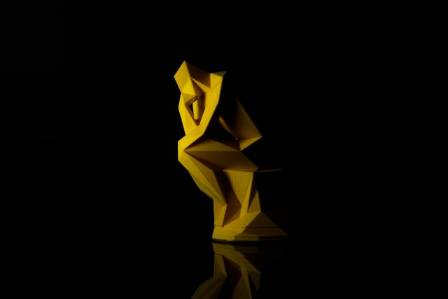
Abstract Art: Capturing the Essence
Abstract art, which also emerged in the early 20th century, takes a contrasting approach by moving away from literal representation. In abstract works, the human figure is distilled into shapes, lines, and colors, allowing artists to convey emotion, rhythm, and conceptual essence rather than exact likeness.
Pablo Picasso and Cubism
Picasso revolutionized human figure representation through Cubism. In Les Demoiselles d’Avignon (1907), he fragments the body into geometric shapes and overlapping planes, presenting multiple perspectives simultaneously. This approach reflects the complexity and multifaceted nature of human experience.
Willem de Kooning: Energy and Emotion
De Kooning’s abstract expressionist paintings, especially his Woman series from the 1950s, combine figurative elements with bold, gestural brushwork. The resulting figures oscillate between recognition and abstraction, capturing the physicality, emotional intensity, and unpredictability of human life.
Henry Moore: Organic Abstraction in Sculpture
Moore’s sculptures translate the human figure into smooth, flowing forms reminiscent of natural landscapes. Works like Reclining Figure (1951) simplify the body into organic, abstract shapes that evoke rocks, hills, and other natural forms. His approach emphasizes the universal qualities of the human body and its intrinsic connection to the environment.
Conclusion
In both surrealism and abstract art, the human figure serves as a conduit for exploring complex aspects of human experience. Surrealist artists manipulate and distort the body to probe the subconscious, dream logic, and hidden emotions, while abstract artists reduce forms to their essential shapes and colors to convey emotional and conceptual truths. Together, these movements expanded the possibilities of how the human form can be interpreted, leaving an enduring legacy that continues to influence contemporary art.
यह भी पढ़ें
वॉलीबॉल खिलाड़ियों के लिए बुनियादी रणनीतियाँ और तकनीकें - सुझाव और ट्रिक्स
रोहन

5 Must-know Facts About Zebras
Charles Harris

पर्वतीय झीलों की निगरानी
चांदनी
Make a Pixel Art Flower
Liam Carter

तीन शहर: माल्टा के बंदरगाह किनारे बसे कस्बों की खोज
एकता

8 Innovative Concepts for a Hanging Garden
Julian Cole