← मुखपृष्ठ3 मिनट का पाठ
विशेष लेख
5 Must-know Facts About Zebras
Zebras are distinctive African equines recognized for their contrasting black-and-white striped coats, which serve as natural deterrents against bloodsucking flies. While there has been scientific discussion about their fundamental coloration, current understanding suggests they are black-coated animals with white striping.
C
Charles Harris
लेखक
लेख परिचय
नीचे पूरा लेख पढ़ें।
अनुभाग
समाचार
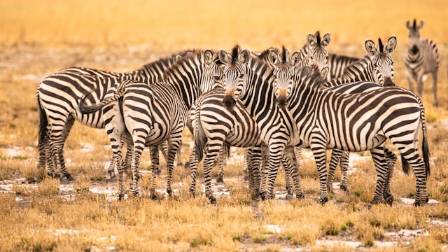
Defining Characteristics
Zebras are distinctive African equines recognized for their contrasting black-and-white striped coats, which serve as natural deterrents against bloodsucking flies. While there has been scientific discussion about their fundamental coloration, current understanding suggests they are black-coated animals with white striping.
As members of the equid family, they possess typical horse-like features including elongated limbs and a prominent neck mane. Their stripe configurations are individually unique, comparable to human fingerprints.
Species and Physical Attributes
Three zebra species exist: the widespread plains zebra, the endangered Grevy's zebra, and the mountain zebra. Each displays distinctive stripe patterns that facilitate identification.
The most numerous plains zebra exhibits broad, widely spaced stripes and inhabits grasslands throughout eastern and southern Africa. Grevy's zebra, distinguished by narrower striping, faces significant conservation challenges and occupies arid, lightly forested regions in Kenya and Ethiopia. Mountain zebras populate the elevated plains of southern Africa, particularly Namibia.
Sexual dimorphism varies among species: male Grevy's zebras exceed females in size, while other species show minimal gender-based size differences. Grevy's zebras stand as the largest species, measuring 1.24-1.6 meters at shoulder height with weights of 350-450 kilograms. Mountain zebras, adapted to rugged landscapes, are slightly smaller at 1.16-1.45 meters shoulder height and 200-430 kilograms. Plains zebras share similar dimensions with mountain zebras, standing 1.1-1.5 meters tall and weighing 175-400 kilograms.
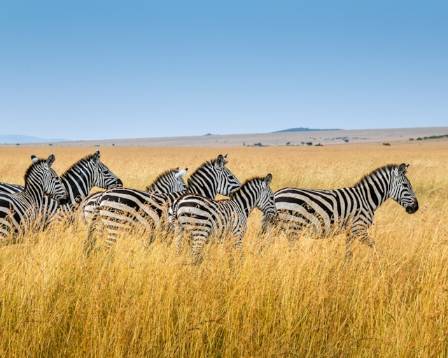
Reproduction and Ecological Role
As mammalian species, zebras bear live offspring following an 11-13 month gestation period. Newborn foals demonstrate remarkable mobility, standing and walking shortly after birth. Maternal care predominates, though herd members provide supplementary protection.
These herbivores fulfill vital ecosystem functions as "pioneer grazers," controlling plant overgrowth to promote biodiversity. Their consumption of tougher vegetation creates opportunities for smaller herbivores that depend on shorter grasses. Additionally, they serve as crucial prey for carnivores including lions, hyenas, and crocodiles. Their survival strategies combine swift mobility with protective herd behavior.
Scientific Classification and Conservation
Each species bears distinct scientific nomenclature:
Grevy's zebra: Equus grevyi
Mountain zebra: Equus zebra
Plains zebra: Equus quagga
The Grevy's zebra's name honors French President Jules Grévy, who received such an animal as a diplomatic gift in 1882 from Ethiopia's ruler.
Conservation status varies significantly:
Mountain zebras: Vulnerable
Plains zebras: Near Threatened
Grevy's zebras: Endangered
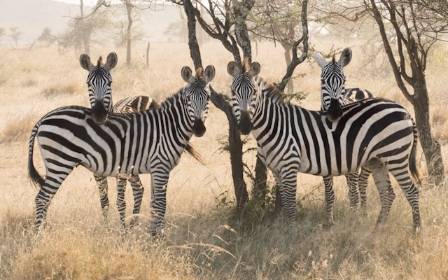
Geographical Distribution
Grevy's zebras inhabit Kenya's and Ethiopia's dry shrublands and grasslands. Plains zebras occupy the most extensive territory, ranging from South Sudan and Ethiopia to Angola and northern South Africa, favoring savannas and grasslands. True to their name, mountain zebras thrive in elevated terrain up to 2,000 meters altitude across South Africa, Namibia, and Angola.
यह भी पढ़ें

en
Metabolism-Boosting Fruit Toast Recipes For Summer
Hazel Rain

hi
7 सबसे महंगे कपड़ों के ब्रांड
सोनिया

en
Bridal Bouquet Style Guide
Tristan Hayes

en
The human figure in surrealism and abstract art
Emerson Lane

hi
स्टार ट्रेल्स फ़ोटोग्राफ़ी में महारत कैसे हासिल करें
ऋत्विक

en
Facts about the Colosseum!
Patrick Coleman