विशेष लेख
Timeless Floral Masterpieces Through the Ages
Floral subjects have captivated artists across centuries, offering a rich canvas for exploring beauty, symbolism, and technique. From meticulously arranged still lifes of the 1600s to expressive brushstrokes of modern abstraction, flower paintings trace an evolving narrative in art history. Regardless of style or era, these compositions evoke emotion, wonder, and a connection to nature’s fleeting splendor—affirming why such works continue to resonate today.
James Carter
लेखक
लेख परिचय
नीचे पूरा लेख पढ़ें।
अनुभाग
समाचार
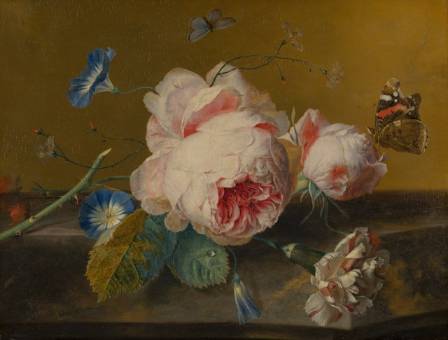
Floral subjects have captivated artists across centuries, offering a rich canvas for exploring beauty, symbolism, and technique. From meticulously arranged still lifes of the 1600s to expressive brushstrokes of modern abstraction, flower paintings trace an evolving narrative in art history. Regardless of style or era, these compositions evoke emotion, wonder, and a connection to nature’s fleeting splendor—affirming why such works continue to resonate today.
Still-Life with Flowers by Ambrosius Bosschaert (circa 1617)
At a time when historical and religious scenes dominated artistic prestige, Ambrosius Bosschaert turned his focus toward floral still lifes with astonishing precision. His symmetrical bouquets, painted with botanical accuracy, established a foundation for countless artists to celebrate flowers in their own right.
Flowers in a Glass Vase, with a Cricket in a Niche by Rachel Ruysch (around 1700)
Rachel Ruysch—among the few revered female artists of the Dutch Golden Age—elevated floral depiction by crafting dynamic, asymmetrical arrangements. With painstaking attention to each petal and vibrant color contrast, she brought movement and vitality to her botanical compositions.
Flowers in a Glass Vase by John Constable (circa 1814)
Although celebrated for his evocative landscapes, John Constable also explored the language of flowers. In this dark-toned still life, bursts of red and yellow blossoms stand out against a subdued background, revealing his mastery of light, drama, and delicate detail.
Hibiscus by Hiroshige (around 1845)
From Japan’s ukiyo-e tradition, Hiroshige’s hibiscus print commands attention with bold orange petals that expand across the frame. Embracing the cultural “language of flowers,” his rendering suggests gentleness and social grace central to Japanese floral symbolism.
Bouquet of Flowers by Édouard Manet (1882)
Manet, a bridge between Realism and Impressionism, often painted loose floral arrangements—not just vases but flowers strewn across tables. His fluid brushwork lent these still lifes an immediacy and spontaneity that became deeply influential in modern art.
Roses and Lilies by Henri Fantin-Latour (1888)
Henri Fantin-Latour favored traditional realism during the rise of Impressionism. In “Roses and Lilies,” the long lily stems traverse the canvas, framing a tender cluster of roses, while the color palette underscores the romanticism and grace of the scene.
Still Life with Irises by Vincent van Gogh (1890)
Created while Van Gogh was in a hospital in Saint-Rémy, this vibrant arrangement contrasts rich violet irises against a softly colored or vivid citron background. The play of complementary hues creates an electrifying tension that amplifies the emotional depth of the work.
Bouquet of Roses by Pierre-Auguste Renoir (late 1890s)
In his later years, Renoir delighted in painting roses with warm, lush tones and loose strokes. This sensuous bouquet radiates softness and movement, inviting viewers to feel the texture and vitality of each bloom.
Flower Garden by Gustav Klimt (1905)
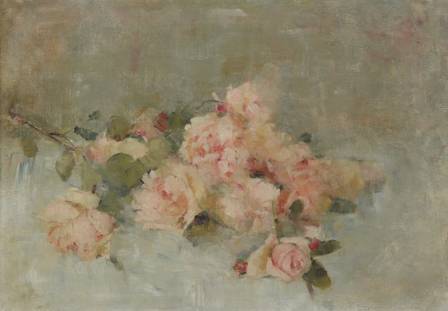
During his “Golden Phase,” Gustav Klimt painted sweeping fields of flowers that spill beyond the canvas edges. “Flower Garden” exudes decorative intensity, marrying natural beauty with ornamental design in a lavish burst of color.
Water Lilies by Claude Monet (1908)
Claude Monet’s iconic series captures ephemeral beauty through light, reflection, and color. Painted outdoors in his Giverny garden, these loosely rendered water lilies verge on abstraction while skillfully preserving the tranquility and mood of the scene.
Amaryllis by Piet Mondrian (1910)
Before his move into geometric abstraction, Mondrian explored floral still life through bold, Fauvist colors. In "Amaryllis," he distills flowers into simplified shapes and vivid blocks of pigment—a daring crossroads between representation and abstraction.
White Vase with Flowers by Odilon Redon (1916)
Redon turned to flower painting in his later years with renewed devotion. Rendered softly in pastel tones, this bouquet lacks any solid tabletop or backdrop—its forms emerge through gradient color, shifting between clarity and dreamlike suggestion.
Red Canna by Georgia O’Keeffe (1919)
Georgia O’Keeffe’s close-up of a canna lily commands the viewer’s attention with fiery reds and oranges set against cooler background hues. She aimed to make us pause and appreciate the flower’s essence, saying: “I will paint it big and they will be surprised into taking time to look at it.”
यह भी पढ़ें
Guide to Styling Monochromatic Dresses for a Sophisticated Look
Rowan Whitaker
Distinguishing Modern from Contemporary Art: A Deeper Insight
Violet Luna
6 Things You Didn't Know About Southwark Bridge In London
Colton Cunningham
शरद ऋतु की सुनहरी रोशनी को कैद करना: एक चरण-दर-चरण जलरंग अध्ययन
भावेश गोहिल
Pineapple: 5 Science-Backed Health Benefits & Easy Ways to Enjoy It
Ella
सेंसो-जी मंदिर की खोज: टोक्यो के प्राचीन स्थल पर 10 ज़रूरी गतिविधियाँ
अर्जुन