← मुखपृष्ठ2 मिनट का पाठ
विशेष लेख
The Corner Towers of the Forbidden City
The Forbidden City, the former imperial palace of China, is famous not only for its grand halls and ceremonial courtyards but also for its four remarkable corner towers. These towers rise at each angle of the massive rectangular wall that encloses the palace, standing as both architectural marvels and historical symbols.
S
Sophia Bennett
लेखक
लेख परिचय
नीचे पूरा लेख पढ़ें।
अनुभाग
समाचार
The Forbidden City, the former imperial palace of China, is famous not only for its grand halls and ceremonial courtyards but also for its four remarkable corner towers. These towers rise at each angle of the massive rectangular wall that encloses the palace, standing as both architectural marvels and historical symbols.
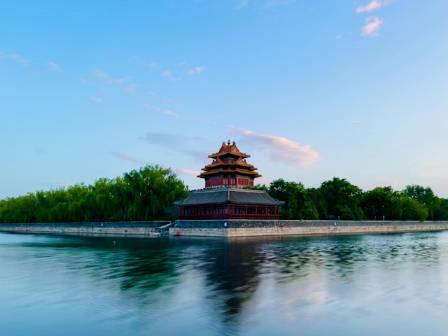
The Forbidden City was designed as the very heart of Chinese imperial power, and every part of its layout follows principles of defense, symbolism, and order. The corner towers were originally constructed with a practical role in mind: they acted as watchtowers, giving guards clear views of the surrounding city as well as the wide moat that circles the palace walls. Together with the palace gates and the wall itself, the towers contributed to a complete defensive system, ensuring the safety of the emperor and his household.
Architecture and Design
Each of the four towers is celebrated for its intricate construction and elegant appearance. Built in the traditional imperial style, they feature multi-layered roofs stacked one above another, decorated with glazed tiles and ridge ornaments. The eaves turn upward in graceful curves, and the woodwork is richly detailed, reflecting the craftsmanship of Ming-dynasty builders.
The design of the towers is said to be extraordinarily complex. Legend holds that the architect took inspiration from a pavilion in the Temple of Heaven, and that the emperor demanded a structure of “nine beams and eighteen columns” topped with 72 ridges—a nearly impossible task. Yet the builders achieved it, creating towers of such sophistication that they are often called masterpieces of traditional Chinese architecture.
Scenic Views
Standing at the edge of the walls, each tower offers commanding perspectives. From these vantage points, one could survey the palace grounds within and the cityscape beyond. For modern visitors, the towers provide some of the most striking views of the Forbidden City.
Particularly popular is the northwest corner tower, where the building seems to rise out of the waters of the moat. At sunrise and sunset, the reflection of the tower on the still surface creates a scene admired by photographers and travelers alike. This view has become one of the iconic images of Beijing.
Symbolic Meaning
Beyond their practical and visual appeal, the corner towers also carried symbolic weight. The Forbidden City was constructed to embody order, hierarchy, and cosmic harmony. By reinforcing the four corners of the imperial enclosure, the towers echoed the idea of stability and balance, suggesting that the emperor’s authority extended outward in all directions.
Their permanence and elegance communicated the message that the dynasty was powerful, enduring, and firmly rooted in both heaven’s mandate and earthly rule.
यह भी पढ़ें

hi
बेहतरीन आभूषणों का शाश्वत आकर्षण: सोने के पेंडेंट और अंगूठियां
राजन गुरुंग

hi
ग्रेफाइट में पर्वतीय परिदृश्यों को चित्रित करने के लिए कलात्मक मार्गदर्शिका
संदीप कश्यप
hi
तियानजिन आई (टिएंटसिन आई)
मृणाल

en
The Most Iconic Mountains by Continent
Fred Anderson

en
Easy Beginner's Guide To Painting A Squirrel
Taylor Snow

hi
छुट्टियाँ मनाने से आपकी सेहत कैसे बेहतर होती है
अर्जुन