विशेष लेख
Fun Facts About Clownfish
Clownfish are among the most recognisable marine animals, loved for their bright colours, lively behaviour, and charming personalities. They are a popular choice among aquarium enthusiasts and have become one of the most famous ocean creatures around the world.
Matthew Cooper
लेखक
लेख परिचय
नीचे पूरा लेख पढ़ें।
अनुभाग
समाचार
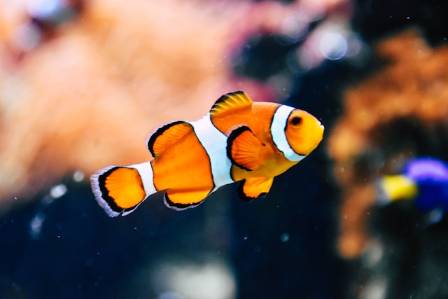
Clownfish are among the most recognisable marine animals, loved for their bright colours, lively behaviour, and charming personalities. They are a popular choice among aquarium enthusiasts and have become one of the most famous ocean creatures around the world.
In this article, we’ll explore the fascinating world of clownfish, including their physical features, different species, natural habitats, feeding habits, reproduction, and the special partnership they form with sea anemones. Let’s discover some interesting facts about these remarkable reef inhabitants.
What Are Clownfish?
Scientifically known as members of the subfamily Amphiprioninae, clownfish are saltwater fish that belong to the Pomacentridae family, which also contains damselfish. These small but colourful fish are found in warm tropical waters, especially throughout the Red Sea and Pacific Ocean.
They usually live in protected coral reefs and lagoons. Their name comes from their playful appearance, with bright colours and unique patterns that make them look like underwater performers.
Different Types of Clownfish
There are around 30 recognised species of clownfish, with the common clownfish (Amphiprion ocellaris) being the most well-known. These fish usually grow between 2 and 5 inches long and are easily identified by their orange bodies covered with three white stripes.
Other popular species include the percula clownfish (Amphiprion percula), also called the orange clownfish, and the tomato clownfish (Amphiprion frenatus). Each species has its own distinctive appearance. For example, the tomato clownfish has a deep orange-red body with a single white stripe located behind its eye.
Clownfish Appearance and Characteristics
Colours
The classic image of a clownfish is an orange body decorated with bright white stripes. However, not every clownfish has exactly the same colouring. Some may have darker orange shades, while unusual genetic variations can create individuals with black, yellow, or darker melanistic patterns.
For instance, Clark’s anemonefish, sometimes called the yellowtail clownfish, has a black body, white stripes, and yellow fins and tail, making it different from the typical orange clownfish.
Size and Weight
Clownfish are small and lightweight marine animals. Most individuals weigh between 42 and 70 grams. Their compact size allows them to move easily through the narrow spaces and complex structures of coral reefs.
Where Do Clownfish Live?
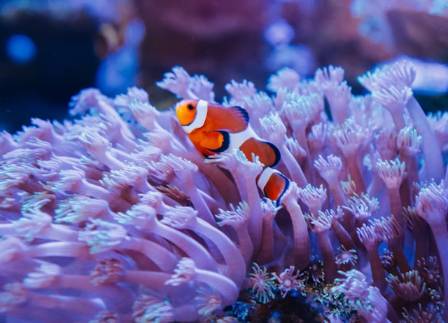
Clownfish mainly inhabit warm tropical oceans, especially areas of the Red Sea and Pacific Ocean. They prefer sheltered environments such as coral reefs, shallow lagoons, and areas where sea anemones are present.
The tentacles of sea anemones provide clownfish with a safe place to hide from predators and create a unique living environment for these colourful fish.
What Do Clownfish Eat?
Although they look delicate, clownfish are actually omnivores, meaning they eat both plant and animal material. Their diet includes small crustaceans, algae, zooplankton, and various types of worms.
This flexible feeding behaviour allows them to survive in different reef environments where food sources may change depending on conditions.
Clownfish Reproduction and Lifespan
Clownfish have an unusual reproductive system and an interesting life cycle. In the wild, they generally survive for around 8 years, while those living in captivity can sometimes reach 12 years or more.
One of the most fascinating features of clownfish is their ability to change sex. All clownfish are born male, but they can transform into females when necessary. This change cannot be reversed.
In a group of clownfish, the largest and most dominant individual becomes the female. If the breeding female dies, the dominant male changes into a female and grows larger to take over the role. This adaptation helps maintain the survival and reproduction of the group.
The Special Relationship Between Clownfish and Sea Anemones
Clownfish and sea anemones share one of the most famous examples of mutualism in nature. Sea anemones are relatives of corals and jellyfish, and their stinging tentacles provide clownfish with protection from predators.
The clownfish are able to live safely among these tentacles because they have a special mucus coating that prevents them from being harmed. In return, clownfish help their host by bringing food, removing unwanted parasites, and defending the anemone from threats such as butterflyfish.
Both species benefit from this close partnership, making their relationship an important example of cooperation in marine ecosystems.
More Interesting Clownfish Facts
Communication
Clownfish communicate using popping and clicking sounds. These noises can help them defend their territory, communicate with other fish, and attract potential mates.
Swimming Skills
Despite being famous ocean swimmers, clownfish are not particularly strong swimmers compared with many other fish species. They move through the water using rapid movements of their pectoral fins, sometimes described as a form of “jet propulsion.”
Female Leadership
Clownfish social groups are led by the largest and most aggressive female. This is unusual because many animal species have males as the dominant members of their groups.
Male Child Care
Similar to the story shown in Finding Nemo, male clownfish take on most of the responsibility for caring for eggs. They guard, clean, and protect the eggs, while females usually play a smaller role after spawning.
Breeding Throughout the Year
Unlike some fish species that reproduce only during certain seasons, clownfish are capable of producing offspring throughout the year when environmental conditions are suitable.
Why Clownfish Are So Fascinating
Clownfish are much more than colourful characters from animated films. Their bright patterns, unusual reproductive system, unique behaviours, and close relationship with sea anemones make them some of the most interesting creatures in the ocean.
Whether you enjoy keeping aquariums or simply appreciate marine wildlife, learning about clownfish reveals the incredible complexity and beauty of underwater ecosystems. These small reef fish continue to inspire curiosity and admiration among ocean lovers around the world.
यह भी पढ़ें
Learn to Draw Birds
Zoe Parker

हार्वेस्ट गोल्ड इंटीरियर टोन के साथ अपने रहने की जगह को बदलें
रणवीर बिष्ट

Iconic Classic Cars Of All Time
Mira Lennox

दुनिया की 13 सबसे प्रतीकात्मक वास्तुकलाएँ जिन्हें हर छात्र को देखना चाहिए
रिया

कप्पाडोसिया में परी चिमनी - प्रकृति की अवास्तविक मूर्तियाँ
गगन

पुरुषों की जैकेटों के लिए मास्टर गाइड: स्टाइल और कार्यक्षमता को निखारें
राजकुमारी सैन