विशेष लेख
Amazing Facts About Canadian Elk
The magnificent Canadian elk, also called wapiti, roam the forests and mountains of northern North America with a commanding presence that draws the attention of wildlife enthusiasts.
Owen Bailey
लेखक
लेख परिचय
नीचे पूरा लेख पढ़ें।
अनुभाग
समाचार
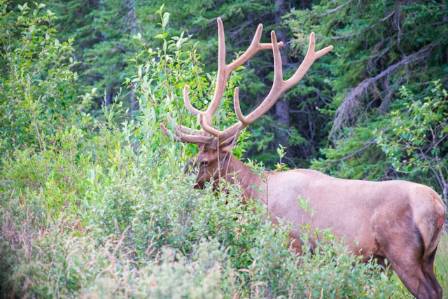
The magnificent Canadian elk, also called wapiti, roam the forests and mountains of northern North America with a commanding presence that draws the attention of wildlife enthusiasts.
As one of the continent’s largest terrestrial mammals, these elk play a vital role in Canada’s ecosystems. From their enormous antlers to their unique social behaviors, Canadian elk are fascinating creatures that embody the wild spirit of the northern wilderness.
While the information below is carefully researched, elk behavior can vary by region and individual. Always observe from a safe distance and follow local park regulations when encountering elk in the wild.
1. Masters of Antler Growth
Male elk shed and regrow their antlers every year, with growth rates that can reach an astonishing 2.5 cm per day during peak development. This rapid growth makes elk antlers one of the fastest-growing tissues in the animal kingdom.
Fully matured antlers can weigh as much as 40 pounds, requiring a high intake of calcium and phosphorus to support their development.
2. The Bugling Serenade
During the fall rut, bull elk emit their iconic bugle calls, echoing across valleys for up to 5 kilometers. These complex vocalizations serve multiple functions: attracting females, warning rival bulls, and asserting dominance within the herd.
A typical bugle begins with a low-pitched sound, rises into a sharp whistle, and ends with grunts—creating a haunting melody that defines the Canadian wilderness.
3. Swift and Sturdy Runners
Despite their size, Canadian elk are capable of impressive speed, reaching up to 72 km/h when threatened. Their long, powerful legs make them exceptional athletes on land.
Even more remarkable is their endurance: elk can maintain a steady trot of 13 km/h for hours, enabling them to traverse large areas in search of food and mates.
4. Expert Swimmers
Elk are strong swimmers, often crossing rivers and lakes during seasonal migrations. Their hollow hair improves buoyancy, while muscular legs propel them efficiently through water.
Calves can swim alongside adults within days of birth. In British Columbia, elk have been observed swimming across waterways up to 10 kilometers wide!
5. Social Savvy
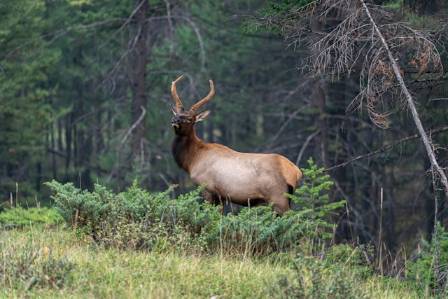
Female elk live in matriarchal herds, guided by an experienced cow who directs movement, feeding, and migration. These groups can include up to 50 related individuals.
Adult bulls generally remain separate in bachelor herds, only joining females during the fall mating season. This separation helps conserve energy and minimizes competition until the rut begins.
6. Winter Warriors
Canadian elk survive harsh winters thanks to their dense, double-layered coats. The soft inner layer traps body heat, while the hollow outer guard hairs provide insulation and repel water.
This natural “thermal armor” allows elk to rest comfortably in snow, even when temperatures drop to -40°C. In spring, they shed the heavy winter coat in patches as the weather warms.
7. Vegetation Managers
A single adult elk consumes roughly 9–13 kilograms of vegetation each day. Their diet varies seasonally and includes grasses, shrubs, tree bark, and aquatic plants.
By feeding on a wide range of plants, elk help maintain forest diversity, creating open patches and supporting habitats for other species. In effect, they act as natural landscape architects.
8. Nature’s Dental Records
Scientists can estimate an elk’s age by examining the wear on its teeth. Young elk have sharp, pointed molars that gradually wear down as they grind tough plant material.
This method shows that wild Canadian elk typically live 10–13 years, though some individuals in protected areas have lived up to 20 years. Teeth can reveal life stories that other features cannot.
9. Velvet Growth Wonder
The velvet that covers growing antlers is one of the fastest-regenerating tissues in mammals. This fuzzy, blood-rich layer supplies nutrients that allow antlers to grow up to 2.5 cm per day.
Researchers in Canada study this tissue for potential applications in human medicine, particularly for therapies aimed at bone regeneration. The velvet contains unique growth factors that could one day improve healing in humans.
यह भी पढ़ें

दुनिया के सबसे प्रसिद्ध युद्धक विमानों में से 11
रफ़रसे

A Comprehensive Guide to Selecting the Ideal Men's Sweater
Rupert Hensley
चार ऋतुएँ: प्रकृति के बदलते चक्रों की सुंदरता और आश्चर्य की सराहना
विनय

समुद्र आपको अद्भुत महसूस कराने के दस कारण
प्रिया

शीर्ष 10 कमल के फूल - कमल के फूलों की सबसे खूबसूरत किस्में
हर्ष

ड्रेस की लंबाई पर एक व्यापक मार्गदर्शिका: अपनी आदर्श हेमलाइन का चयन करें
सुखदेव कश्यप