विशेष लेख
Historical Milestones and Fascinating Realities of Rocketry
The fundamental science behind rockets has existed for over two millennia. Human curiosity regarding the cosmos did not begin with modern moon landings; rather, mankind has been captivated by the mysteries of space for centuries. This obsession led to the invention of various devices designed to conquer the heavens. Explore eight compelling insights into the development and mechanics of rockets below.
Emily Katherine Lockwood
लेखक
लेख परिचय
नीचे पूरा लेख पढ़ें।
अनुभाग
समाचार
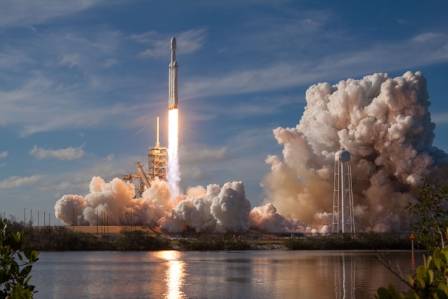
The fundamental science behind rockets has existed for over two millennia. Human curiosity regarding the cosmos did not begin with modern moon landings; rather, mankind has been captivated by the mysteries of space for centuries. This obsession led to the invention of various devices designed to conquer the heavens. Explore eight compelling insights into the development and mechanics of rockets below.
The Chinese Origins of Rocket Technology
The conceptualization of the rocket traces back to the 9th or 10th century in China. The earliest iterations likely emerged during the Song Dynasty following the discovery of gunpowder. Initially, these were simple tubes filled with explosive charges intended for entertainment as fireworks. By approximately 1100 AD, these devices utilized solid propellants and transitioned into military hardware known as "fire arrows." While historical records credit different inventors like Feng Zhisheng and Tang Fu at varying intervals, China remains the undisputed birthplace of the technology.
Evolution into Military Weaponry
Beyond their use in celebrations, rockets were pivotal in medieval warfare. During conflicts between the Chinese Empire and Mongol forces, the Chinese deployed arrows fueled by gunpowder. The retreating Mongol soldiers described these terrifying projectiles as "arrows of flying fire," marking the first recorded use of propellant rockets in combat. This technology traveled across Eurasia during the 13th-century Mongol invasions, appearing at the Battle of Mohi in 1241 and eventually inspiring the creation of modern military missiles.
The First Successful Space Launch
Although China pioneered the early technology, Germany was the first nation to successfully send a rocket into space. In 1942, during World War II, the Germans developed the V-2 rocket. While it was designed as a long-range weapon to strike targets in Western Europe and England, its technical capabilities allowed it to reach the threshold of space. After the war concluded, the V-2 served as the foundational blueprint for early space programs in both North America and the Soviet Union.
Propulsion Without Atmospheric Air
A common misconception is that rockets require air to function; however, they are entirely self-contained. Unlike jet engines, which must intake oxygen from the surrounding atmosphere, a rocket engine carries its own oxygen supply known as an oxidizer. In the combustion chamber, fuel and the oxidizer ignite, creating an explosion that generates thrust. This force propels the rocket forward in a vacuum, allowing it to navigate the airless environment of outer space.
The Mechanics of a Three-Stage Launch
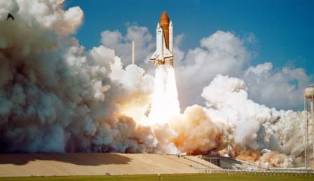
A rocket may look like a single metallic structure, but it actually operates in distinct phases known as stages. During takeoff, the first stage ignites to lift the massive weight of the vehicle. Once its fuel is depleted, it detaches to reduce weight. The second stage then fires to accelerate the craft further. Finally, the third stage utilizes "spin-stabilization"—spinning like a perfectly thrown football—to ensure the vehicle maintains a precise trajectory and remains on course as it enters orbit.
The Legacy of the Saturn V
The Saturn V remains one of the most successful and powerful rockets ever built. Developed by NASA for the Apollo lunar missions, this three-stage, liquid-fuel vehicle completed thirteen successful launches. Liquid-fuel rockets are generally preferred for heavy lifting because they are more powerful than solid-fuel variants, though they are also more chemically volatile. Currently, remnants of the Saturn V stages from the historic moon missions still drift in outer space.
Reaching the Depths of Interstellar Space
In terms of distance, the Voyager 1 and Voyager 2 rockets hold the record for the farthest man-made objects from Earth. By 2018, these twin probes had traveled approximately 13 billion miles. They have passed through a region called the heliosheath, located beyond the "termination shock," where solar winds slow down and clash with the winds of interstellar space. These rockets continue to provide data from the most remote reaches of our solar system.
The Heritage of Rocket City
Huntsville, Alabama, is famously recognized as "Rocket City" due to its central role in North American space exploration. In 1958, the first North American satellite, Explorer 1, was launched into orbit using a vehicle developed in this town. Huntsville remains the home of the NASA space camp and serves as a major hub for both historical space research and modern technological advancements.
यह भी पढ़ें

दुनिया की 13 सबसे प्रतीकात्मक वास्तुकलाएँ जिन्हें हर छात्र को देखना चाहिए
रिया

दुनिया भर के 7 सबसे अच्छे फिटनेस इवेंट्स
उत्कर्ष

5 Must-know Facts About Zebras
Charles Harris

Discovering 4 World’s Best Ski Resorts
Ethan

भूमध्यसागरीय यात्रा के 10 कारण
मृदुला
विनिर्माण क्षेत्र में रोबोटिक आर्म्स के लिए एक व्यापक मार्गदर्शिका
नंदलाल गौतम