विशेष लेख
Uncover 11 Fascinating Facts About White Cats That Will Surprise You
White cats have long captured the attention of feline lovers with their sleek, snowy coats and unique traits. From their rare coloration to their roles in culture and media, these cats are full of surprises. Below are 11 intriguing facts about white cats that every cat enthusiast will find captivating.
Benjamin Carter
लेखक
लेख परिचय
नीचे पूरा लेख पढ़ें।
अनुभाग
समाचार

White cats have long captured the attention of feline lovers with their sleek, snowy coats and unique traits. From their rare coloration to their roles in culture and media, these cats are full of surprises. Below are 11 intriguing facts about white cats that every cat enthusiast will find captivating.
Here are 11 fascinating facts about white cats for every feline fan.
1. Pure White Cats Are the Rarest Color
Cats exhibit a wide range of beautiful coat colors and patterns, such as tabby, tuxedo, calico, and tortoiseshell. Yet, among cats with solid-colored coats, pure white stands out as one of the least common. What leads to their all-white fur? It all comes down to the dominant W gene, often called the masking gene. This gene “hides” all other genes responsible for coat color and pattern, resulting in the cat’s snowy white appearance.
2. Many Different Breeds Can Have All-White Coats
Just like calico and tortoiseshell cats, all-white cats are not tied to a single specific breed. Instead, a variety of breeds—including both long-haired and short-haired ones—can have a pure white coat. Examples of such breeds include the Persian, Turkish Angora, American Shorthair, Siamese, and Devon Rex.
3. White Cats Can Have Very Unique Eye Colors
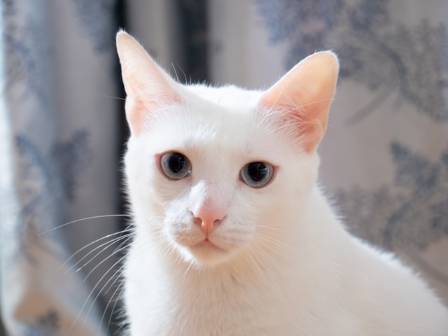
You might not know that a cat’s eye color is connected to the production of melanin in its body. Melanocytes are the cells that contain melanin, a pigment present throughout the body. If a white or light-colored cat has few or no melanocytes in its eyes, it will have light-colored eyes, and blue eyes are a common result. All-white cats can sport a range of striking eye colors, including blue, green, yellow, orange, or even a mix of two different colors.
4. Many White Cats Are Deaf
The same genetic factors that give white cats their snowy coats and one-of-a-kind eye colors can also lead to total or partial deafness. The W gene reduces the number of melanoblasts—cells that produce melanin. This reduction causes chemical imbalances in the ear, which damage the tiny hairs in the inner ear and ultimately result in deafness. This issue is particularly common in white cats with blue eyes, many of whom may become deaf within a few days of being born. For white cats with one blue eye and one eye of another color, the ear on the side of the blue eye often lacks hearing, while the other ear functions normally. If your cat is partially or fully deaf, it’s important to take extra safety measures. Avoid startling them, and use visual signals instead of verbal commands to communicate. It’s also best to keep partially or fully deaf cats indoors at all times; they may struggle to avoid dangers or defend themselves against potential predators.
Warning
White cats are prone to deafness, especially those with blue eyes. It's crucial to take precautions to prevent startling them and to rely on visual cues for communication.
5. White Cats Are Not Albino
Having white fur and being albino are two distinct things. The key difference lies in their genetics: white cats simply have a gene that codes for white fur, while albinism is a genetic condition that causes a complete lack of color pigmentation in the skin, fur, and eyes. The simplest way to tell if a cat is albino is by looking at its eyes. As mentioned earlier, white cats can have a wide variety of eye colors. Albino cats, however, usually have eyes that appear very pale blue, pink, or red. (In reality, their eyes aren’t truly pink or red; the color comes from the reflection of light off the blood vessels in their eyes.)
6. White Cats Can Get Sunburned, Too
Much like humans, cats with light or white coats face a higher risk of getting sunburned—especially on areas like their ears, eyelids, and nose. Because they’re more susceptible to sunburn, white cats also have a greater chance of developing squamous cell carcinoma or other types of skin cancer. To protect your white cat’s delicate skin from sun damage, it’s important to take the right steps. If your cat loves to sunbathe, try to limit their time near bright windows between 10 a.m. and 4 p.m., when the sun’s rays are strongest. You might also consider installing heavier drapes or shades to block or reduce the amount of UV light coming through your windows. If you have an outdoor cat or live in an area with intense sunlight, talk to your veterinarian about waterproof sunscreen that’s designed specifically to protect cats’ sensitive skin.
7. White Cats Are Considered Lucky
Unlike black cats, which are sometimes thought to bring bad luck, all-white cats are seen as symbols of good luck and fortune in cultures around the world. The famous Japanese Beckoning Cat (also known as Maneki Neko) is most often depicted as a white cat. These figurines first appeared around 1870 and are typically placed near the entrances of homes and businesses to attract good luck.
8. Many White Cats Have Lived in the White House
It makes sense, doesn’t it? Several United States Presidents had white cats roaming the White House during their time in office. Rutherford B. Hayes, Gerald Ford, and Jimmy Carter—the 19th, 38th, and 39th Presidents, respectively—all owned Siamese cats. While many Siamese cats aren’t completely white, most of their coats are white. William McKinley, the 25th President, had two Turkish Angoras with unique names: Enrique DeLome and Valeriano Weyler.
9. White Persian Cats Are the Most Popular
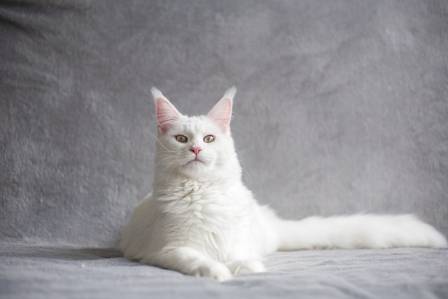
There’s no denying it: white cats are beautiful! But among white cats, the most striking and in-demand is likely the white Persian. With their long, silky coats and large, expressive eyes, these cats have an elegant appearance. It’s no surprise that they’ve been featured on cat-themed calendars and pet food labels for decades. If you own a white Persian, though, you know that regular grooming is essential. Without it, their coat can become dirty and matted, turning your “model kitty” into a messy one.
10. White Cats are Perceived as Shy
Every cat has a unique personality, but people often make generalizations about how a cat’s coat color relates to its temperament. Common assumptions include tortoiseshell cats being “feisty,” orange cats being outgoing and friendly, and black cats being especially affectionate. Along these lines, white cats are often described as being a bit shyer and calmer than cats of other colors.
11. Many White Cats Have Appeared on Television and in Movies
White cats, with their eye-catching appearance, have been featured in various forms of entertainment over the years. One example is the animated white cats Duchess and Marie from Disney’s The Aristocats. Another is the white Persian cat that played the role of Blofeld’s cat in the James Bond film From Russia with Love. Additionally, a white cat was featured in the 1972 movie Bluebeard.
Conclusion
White cats are far more than just visually striking, they’re a source of fascination, with unique genetic traits, cultural significance, and even roles in popular media. From their rare pure white coats to their potential for deafness and sun sensitivity, these cats require special care and attention that only adds to their charm. Whether they’re bringing luck as a Maneki Neko figurine, living in the White House, or starring in a movie, white cats have a way of leaving a lasting impression. For anyone who loves cats, learning about these 11 facts only deepens the appreciation for these snowy, wonderful felines.