विशेष लेख
Picasso Portraits That Redefined the Art of Representation
For centuries, portrait painting focused on capturing a person’s physical appearance—their features, expression, and character preserved on canvas. However, Picasso completely changed this tradition. Rather than faithfully reproducing reality, he broke faces apart, rearranged them, and transformed them into bold visual inventions. His portraits do more than depict people; they challenge viewers to reconsider how identity can be seen and understood.
Beatrice Holloway
लेखक
लेख परिचय
नीचे पूरा लेख पढ़ें।
अनुभाग
समाचार
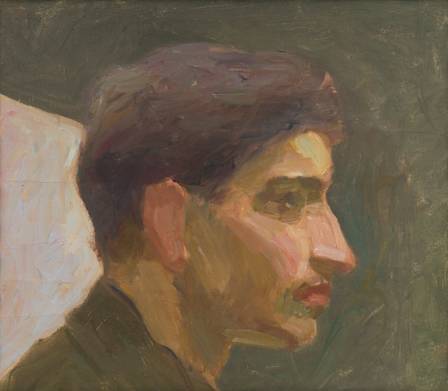
For centuries, portrait painting focused on capturing a person’s physical appearance—their features, expression, and character preserved on canvas. However, Picasso completely changed this tradition. Rather than faithfully reproducing reality, he broke faces apart, rearranged them, and transformed them into bold visual inventions. His portraits do more than depict people; they challenge viewers to reconsider how identity can be seen and understood.
Throughout a career spanning more than seventy years, Picasso continually reinvented portraiture. From the emotional realism of his Blue Period to the groundbreaking innovations of Cubism and the vibrant portrayals of his later years, his work revolutionized both modern art and the concept of representation itself.
Early Portraits: The Blue and Rose Periods
Before developing Cubism, Picasso’s portraits already emphasized emotion and symbolism over simple likeness.
Blue Period (1901–1904)
Paintings from this era often express loneliness, hardship, and sorrow. Works such as Portrait of Angel Fernández de Soto use cool blue tones and elongated forms to convey deep emotional intensity rather than physical accuracy.
Rose Period (1904–1906)
As his palette warmed, Picasso created portraits that felt more intimate and human. Paintings like Portrait of Gertrude Stein reveal psychological complexity, focusing on character and presence rather than strict realism.
Even in these early years, Picasso was already exploring the idea that a portrait could communicate inner experience rather than merely record appearances.
Cubist Portraits: Breaking with Tradition
Picasso’s most dramatic contribution to portraiture came through Cubism. Working alongside Georges Braque, he challenged centuries of artistic conventions based on perspective and realistic representation.
Les Demoiselles d’Avignon (1907)
Although not a traditional portrait, this landmark painting introduced the fragmented forms that would become central to Cubism. Influenced by African masks, the faces appear powerful, abstract, and radically modern.
Analytic Cubism
In works such as Portrait of Daniel-Henry Kahnweiler (1910), the subject is divided into overlapping geometric planes. The recognizable face becomes secondary to the structure of the composition, encouraging viewers to actively interpret the image.
Synthetic Cubism
By the early 1910s, Picasso began incorporating brighter colors and collage-like elements. Portraits from this period, including Man with a Pipe, feel reconstructed from multiple visual fragments, creating layered and dynamic representations.
These Cubist portraits were not simply distortions; they represented an entirely new way of understanding how a human figure could be depicted.
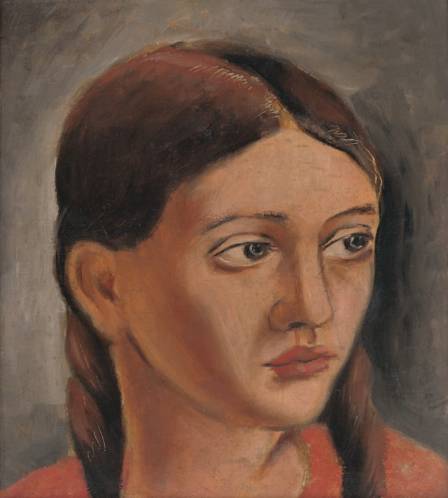
Portraits of Women: Muses and Artistic Evolution
Picasso’s personal relationships often inspired major shifts in his artistic style. Each significant partner became the subject of a distinctive body of portrait work.
Fernande Olivier
Fernande appeared in many of Picasso’s early experiments, helping mark his transition from realism toward abstraction.
Olga Khokhlova
During Picasso’s marriage to Olga, his portraits became more classical and refined, reflecting a temporary return to traditional forms.
Marie-Thérèse Walter
Marie-Thérèse inspired some of Picasso’s most luminous and sensual works, including Girl Before a Mirror (1932), where tenderness merges with dreamlike imagery.
Dora Maar
Few subjects inspired portraits as emotionally intense as Dora Maar. Works such as The Weeping Woman (1937) combine personal anguish with broader themes of suffering and conflict.
Françoise Gilot
Portraits from Picasso’s years with Françoise often feature brighter colors and more playful compositions, reflecting family life and renewed optimism.
Defining Characteristics of Picasso’s Portraits
Several qualities distinguish Picasso’s portraiture from traditional approaches:
Fragmented forms reveal psychological depth rather than physical appearance.
Multiple viewpoints appear simultaneously within a single image.
Strong emotional expression often outweighs realism.
Constant stylistic reinvention reflects changing relationships and historical events.
Experimental techniques remain connected to universal human experiences.
Later Portraits: Freedom and Reinvention
In his later decades, Picasso’s portraits became increasingly bold, colorful, and spontaneous. He frequently revisited the works of historical masters such as Diego Velázquez and Rembrandt, reinterpreting their compositions through his own visual language.
These late works demonstrate remarkable creative freedom. Even in his nineties, Picasso continued experimenting with new ways of representing the human face.
Why Picasso Changed Portraiture Forever
Picasso’s portraits transformed the genre in several important ways:
They challenged the belief that portraits must closely resemble their subjects.
They turned faces into symbols of psychology, culture, and social experience.
They elevated personal relationships into universal explorations of emotion.
They questioned long-established artistic traditions and encouraged new forms of visual thinking.
His work remains one of the foundations of modern portraiture.
Enduring Influence
The impact of Picasso’s portrait art continues to be felt today.
His innovations:
Influenced movements such as Surrealism and Abstract Expressionism.
Encouraged artists to prioritize expression over likeness.
Established distortion as a legitimate artistic tool for revealing truth.
Helped keep portraiture relevant and dynamic within modern art.
Conclusion
Picasso fundamentally changed the meaning of portrait painting. From the emotional intensity of the Blue Period to the revolutionary experiments of Cubism and the powerful symbolism of The Weeping Woman, his portraits pushed artistic representation into entirely new territory.
Rather than simply recording appearances, Picasso used portraiture to explore identity, emotion, memory, and perception. Through constant innovation, he transformed the human face into a vehicle for deeper truths, ensuring his portraits remain among the most influential works in art history.
Frequently Asked Questions
What is Picasso’s most famous portrait?
The Weeping Woman (1937) is widely regarded as one of his most recognizable and emotionally powerful portraits.
Did Picasso create self-portraits?
Yes. Picasso produced self-portraits throughout his life, including a number of striking works created in his later years.
Who appeared most often in Picasso’s portraits?
Many of his portraits featured important companions and muses, including Fernande Olivier, Olga Khokhlova, Marie-Thérèse Walter, Dora Maar, and Françoise Gilot.
How did Picasso revolutionize portrait painting?
He moved away from realism and used Cubism, abstraction, symbolism, and multiple perspectives to express psychological and emotional realities.
Where can Picasso’s portraits be viewed today?
Major examples can be found in institutions such as Museum of Modern Art, Tate Modern, Museo Nacional Centro de Arte Reina Sofía, and Museu Picasso.
यह भी पढ़ें

अमेरिका में वर्तमान में बिक्री के लिए उपलब्ध शीर्ष स्तरीय प्रदर्शन वाहन
नरेश पारीक

स्टार ट्रेल्स फ़ोटोग्राफ़ी में महारत कैसे हासिल करें
ऋत्विक
तीन ब्रेकफास्ट ब्रेड रेसिपी
सुरेश

दुनिया में सबसे खूबसूरत सूर्यास्त कहाँ होता है?
इशाना

5 Must-know Facts About Zebras
Charles Harris

पहाड़ों को काटकर बनाई गई 10 शानदार पुरानी इमारतें
उषा