विशेष लेख
Adaptive Soft Robotics: Engineering Shape-Shifting Machines with Kirigami-Inspired Materials
While traditional robotic systems—such as automated assembly arms or high-performance quadrupedal units—are capable of remarkable tasks, they are fundamentally constrained by their rigid, static structures. Many complex environments require a level of physical versatility that conventional hardware cannot provide. Recent breakthroughs in soft robotics, detailed in the journal Science Robotics, have introduced a transformative approach to this challenge: a robot capable of fundamentally altering its physical form to suit different operational needs.
Malcolm Vickers
लेखक
लेख परिचय
नीचे पूरा लेख पढ़ें।
अनुभाग
समाचार
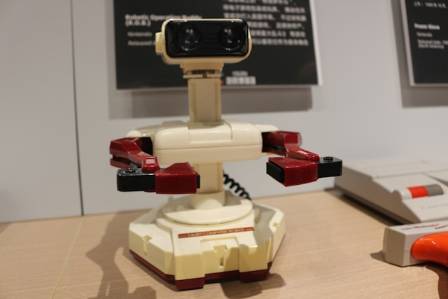
While traditional robotic systems—such as automated assembly arms or high-performance quadrupedal units—are capable of remarkable tasks, they are fundamentally constrained by their rigid, static structures. Many complex environments require a level of physical versatility that conventional hardware cannot provide. Recent breakthroughs in soft robotics, detailed in the journal Science Robotics, have introduced a transformative approach to this challenge: a robot capable of fundamentally altering its physical form to suit different operational needs.
Researchers have developed a "shape-morphing" composite that allows a machine to transition from a flat, two-dimensional state into various three-dimensional configurations. This innovation represents a significant leap in material science, offering a substrate that is flexible enough to undergo radical deformation yet structurally sound enough to maintain mechanical integrity under load.
The Mechanics of Reversible Plasticity
The core of this technology is a sophisticated composite material featuring metallic microtubes integrated into elastomeric rubber sheets. The structural geometry of these sheets is inspired by kirigami, a traditional Japanese art form involving both the folding and cutting of a medium to enhance its stretchability and structural complexity. This design allows the material to be contorted into intricate shapes without structural failure.
The transformation process relies on a unique property known as "reversible plasticity." To lock a new shape into place, the material uses a low-melting-point alloy (LMPA) within the tubing. When a change is required, internal heaters melt the metal, allowing the rubber to guide the structure back to its original orientation or into a new configuration. Once the desired form is achieved, the metal re-solidifies, providing the necessary rigidity to support motors or rotors. This entire cycle can occur in as little as 0.1 seconds and can be repeated indefinitely. This allows a single device to function as a terrestrial rover and then, in moments, deploy rotors to become an aerial drone.

Functional Versatility and Future Industrial Potential
Beyond simple land-to-air transitions, the researchers demonstrated the material's utility by creating a multipurpose aquatic craft. The device can float on a liquid surface, modify its hull to submerge like a submarine, and further adjust its shape to collect underwater objects before returning to the surface. Such versatility suggests that future iterations could be used for complex environmental monitoring or search-and-rescue operations where terrain conditions shift rapidly.
The practical implications of these shape-shifting systems are vast. Because the composite can be repaired simply by heating and reshaping, it paves the way for self-healing machines that can recover from structural damage autonomously. Furthermore, soft robotic systems are inherently safer for human interaction than their rigid counterparts, potentially allowing for the automation of tasks in close-proximity workspaces where traditional robots would pose a safety risk. As this material continues to evolve, it may lead to the development of wearable robotics, adaptive human-machine interfaces, and highly resilient exploration tools capable of navigating the most unpredictable environments on Earth and beyond.
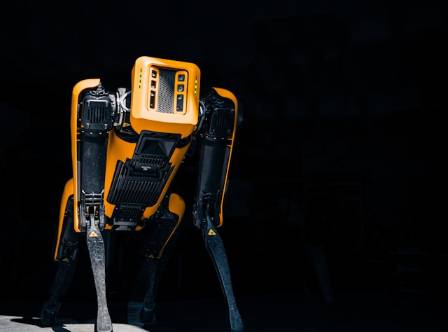
यह भी पढ़ें

एक भेड़िया कितनी तेजी से दौड़ सकता है - (भेड़ियों के प्रकार और उनकी गति)
आरती

Mastering the Art of Plant Photography: Expert Tips and Techniques
Leo Xavier

अगर आपको शांति और आराम की ज़रूरत है, तो 11 बेहतरीन जगहें
ऋषभ

The Ultimate Guide to Nusa Penida
Adrian Frost

तियानजिन आई (टिएंटसिन आई)
मृणाल

The Empire State Building and Its Historical Journey of Innovation and Fire Protection
Cordelia Fairchild