विशेष लेख
Discover the Wonders of Seals and Their Ocean World
Seals represent a fascinating group comprised of three distinct families and 33 individual species of web-footed marine mammals. These animals possess rounded bodies that gracefully taper at both ends alongside a heavy layer of fat known as blubber which effectively preserves body heat, archives vital nutrients, and assists with natural flotation. The physical dimensions of these creatures vary dramatically across the spectrum, spanning from the modest Baikal seal which measures just 1.1 meters in length to the massive elephant seal that can reach 6.5 meters and tip the scales at an astonishing 3,700 kilograms.
Sophie Reynolds
लेखक
लेख परिचय
नीचे पूरा लेख पढ़ें।
अनुभाग
समाचार
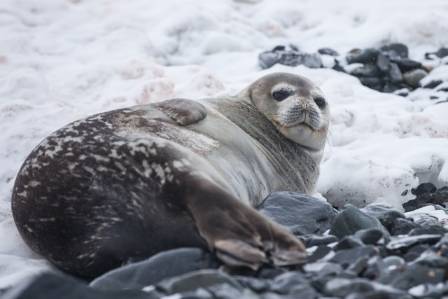
Seals represent a fascinating group comprised of three distinct families and 33 individual species of web-footed marine mammals. These animals possess rounded bodies that gracefully taper at both ends alongside a heavy layer of fat known as blubber which effectively preserves body heat, archives vital nutrients, and assists with natural flotation. The physical dimensions of these creatures vary dramatically across the spectrum, spanning from the modest Baikal seal which measures just 1.1 meters in length to the massive elephant seal that can reach 6.5 meters and tip the scales at an astonishing 3,700 kilograms.
Exploring the Distinct Seal Families
The three evolutionary lineages of these marine mammals include the eared seals, scientifically known as Otariidae, the earless seals, classified as Phocidae, and the majestic walrus, which stands as the solitary representative of the Odobenidae family. Members of the eared category possess easily visible external ears, noticeably larger flippers, and far more distinctive coats of fur compared to their earless relatives. Conversely, earless variants are frequently designated by researchers as true seals. While these true seals do possess functioning auditory organs, they simply lack any external flaps over their ears.
Global Distribution and Compulsive Mating Rituals
These adaptable creatures inhabit every single continent across the globe, with some species occupying vast global ranges while other populations remain restricted to a single geographic location. Although numerous species spend the vast majority of their existence submerged in water, they spend critical periods of time on solid land or ocean ice during significant life events such as mating rituals and giving birth. Virtually all varieties thrive exclusively in saltwater environments, with the notable exception of the diminutive Baikal seal which resides entirely within the freshwater depths of Lake Baikal located in Siberia.
The annual breeding season introduces an incredibly intense and competitive period for male individuals, who engage in fierce physical battles with their rivals to establish dominance and secure the affection of available females. These males become so completely consumed by this competitive drive that they totally abstain from eating during the entire breeding phase, fearing that seeking out food might allow a competitor to steal away a female companion. A dominant male will attempt to reproduce with the maximum number of females possible during this window, and they offer absolutely no assistance in the subsequent upbringing of the newborn pups.
Nurturing Newborn Pups and Balancing the Ecosystem
Mother seals invariably deliver their offspring upon solid ground or sturdy shelves of sea ice. These dedicated mothers nurse their newborn pups for up to a full month until the young animals grow sufficiently large and muscular to navigate the waves and forage autonomously. Throughout this nursing phase, the mothers remain constantly beside their vulnerable offspring and refuse to consume any food whatsoever, depending entirely upon their internal reserves of blubber for survival.
In their natural habitats, these marine mammals perform a vital ecological role by acting as proficient predators of fish, squid, shelled invertebrates, marine birds, and diverse aquatic organisms, while simultaneously serving as a primary food source for apex hunters like polar bears, killer whales, and large sharks. Furthermore, their continuous swimming movements generate powerful underwater currents that effectively circulate essential nutrients from the deep ocean toward the coastal shores.
Understanding the Scientific Nomenclature of Pinnipeds
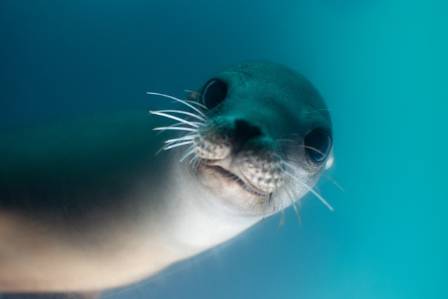
The official scientific designation for this entire group of marine animals is Pinnipedia, a term derived directly from classical Latin roots where pinna signifies a wing or fin and pes indicates a foot. Within this overarching classification, each of the 33 distinct species bears its own unique taxonomic identity. Some of the most prominent examples documented by marine biologists include the crabeater seal known scientifically as Lobodon carcinophaga, the leopard seal designated as Hydrurga leptonyx, the northern elephant seal categorized as Mirounga angustirostris, and the southern elephant seal identified as Mirounga leonina.
Assessing Environmental Threats and Population Status
The 33 recognized species display widely varying conservation statuses, ranging from populations of least concern to varieties that are unfortunately altogether extinct on the official global red list. Both the Japanese sea lion and the unique Caribbean monk seal have lacked any verified observations throughout the preceding 50 years, leading experts to classify them as permanently extinct. While there are currently no species designated as critically endangered, several variants including the Galapagos fur seal, the Hawaiian monk seal, the Caspian seal, and the Mediterranean monk seal remain severely endangered. Currently, the Mediterranean monk seal is recognized as the most highly threatened population of all.
Massive commercial harvesting operations and unintentional fatalities resulting from fishing gear entanglement or accidental bycatch represent two of the most devastating drivers of mortality. In addition to these factors, rapid climate change poses an immediate and existential threat to multiple populations, particularly those specialized varieties that rely heavily on the stability of sea ice for their survival.
Geographic Territories and Semi Aquatic Lifestyles
These animals can be found dispersed throughout the oceans of the earth, though a significant portion of the species exhibits a strong preference for frigid polar environments. Certain varieties are confined to exceptionally narrow territories, such as the Hawaiian monk seal which resides exclusively around the Hawaiian chain of islands, or the Galapagos fur seal which remains isolated around the Galapagos archipelago. Another prime example is the Caspian seal, an animal that dwells solely within the landlocked boundaries of the Caspian Sea.
These localized populations tend to be inherently more susceptible to the threat of extinction because ecological disruptions within their restricted habitats can instantly jeopardize the entire global population of the species. This vulnerability stands in stark contrast to widespread varieties like the abundant crabeater seal, which occupies the vast perimeter of Antarctica and maintains a thriving population estimated at roughly 4,000,000 individuals. Because these marine mammals possess a semi-aquatic nature, they spend a portion of their lives on solid ground. Numerous species utilize shorelines or floating ice sheets to rest, regulate their internal body temperatures, find mates, and give birth to their young. Certain varieties consistently stay in close proximity to the shoreline, a trait excelled by the walrus, which favors shallow coastal waters and frequently returns to dry land for periods of rest.
यह भी पढ़ें

शीर्ष 10 सुंदर लिली फूल जिन्हें आप पसंद करेंगे
अजय

A Collection of Free Felt Animal Patterns for Beginners
Laura

Bridal Bouquet Style Guide
Tristan Hayes
The world’s different types of swan
Christopher Hayes

10 Simple Ways to Make Your Bedroom Feel Cozier
Clair

Metabolism-Boosting Fruit Toast Recipes For Summer
Hazel Rain