विशेष लेख
Six Winter Scenes in Art
Winter in the northern hemisphere brings short days, biting winds, frosty paths, and cozy knitwear. It marks the end of one year and the beginning of another, a season of reflection and transition.
Jordan Vale
लेखक
लेख परिचय
नीचे पूरा लेख पढ़ें।
अनुभाग
समाचार
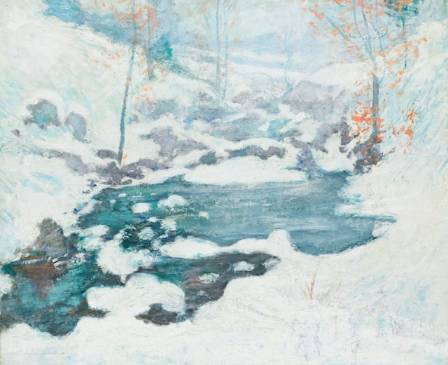
Winter in the northern hemisphere brings short days, biting winds, frosty paths, and cozy knitwear. It marks the end of one year and the beginning of another, a season of reflection and transition.
Winter has long inspired artists. Some express human emotions through ice, snow, and mist, while others focus on realistic depictions, from the soft morning light on frost-covered trees to snow-laden city streets. In the twentieth century, many artists began exploring the season through abstract approaches, capturing the mood and essence of winter in new ways.
Here is a selection of works from our collection that showcase the diverse ways artists have interpreted winter.
Peter Doig, Ski Jacket (1994)
A newspaper photograph of beginner skiers on a Japanese mountain sparked Peter Doig’s creation of this painting. He frequently paints snow scenes because, in his words, snow “draws you inward, often evoking nostalgia, imagination, and reflection.” The painting captures a quiet, contemplative mood within the snowy landscape.
Wilhelmina Barns-Graham, Glacier Crystal, Grindelwald (1950)
Winter has inspired artists to explore colors, forms, and textures that evoke the season. These abstract works are often informed by real experiences and landscapes.
Barns-Graham painted this piece after visiting the Grindelwald Glacier in Switzerland. She was captivated by its immense scale, the way light played across its surface, and the contrast between its solidity and glass-like transparency. Her abstraction conveys the grandeur and mystique of the glacier.
Marie-Louise von Motesiczky, View from the Window, Vienna (1925)
What better way to paint on a cold winter day than from inside, observing the season through a window? The artist can capture the frosty exterior while remaining warm.
This work depicts the view from von Motesiczky’s fourth-floor flat in Vienna (the distant dome belongs to the now-demolished Johann Strauß-Theater). She uses the window frame and curtain to guide the composition. Snow-covered buildings are rendered with loose brushstrokes in muted grays and soft pinks, creating a calm and fresh winter atmosphere. The artist noted that this style was new for her, inspired by the striking freshness of snow in the city.
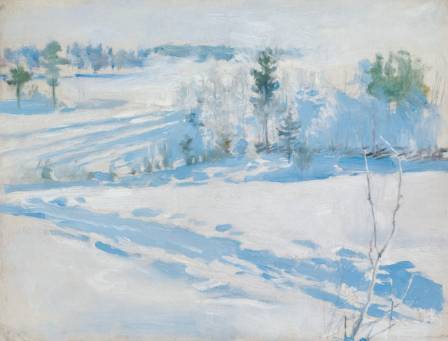
Tacita Dean, Majesty (2006)
Tacita Dean’s painting was inspired by her photograph of the majestic Fredville oak tree in Kent, one of England’s largest and oldest complete oaks. She painted the surrounding area in white to isolate the bare branches and trunk, emphasizing its form. The weathered tree stands as a symbol of time passing, endurance, and strength, having survived many winters and poised to withstand many more.
Stanislawa De Karlowska, Berkeley Square (c.1935)
De Karlowska painted several works depicting London’s central squares. This piece captures a winter evening in Berkeley Square.
Street lamps illuminate the nearly empty streets, with only two women walking toward a waiting taxi. Viewed from a high vantage point, the painting conveys the isolation of urban life. Observers, like the artist, look down on the fleeting world of the square, feeling both distance and quiet intimacy.
Briton Rivière, Beyond Man’s Footsteps (exhibited 1894)
Animal painter Briton Rivière was inspired by Charles Darwin’s ideas on evolution and the connection between humans and animals.
This dramatic icy scene portrays the Arctic as a place of sublime beauty and extreme conditions. No humans are present; a polar bear dominates the scene. Rivière painted this from imagination, using explorers’ written accounts for reference, while the bear was modeled after one at the London Zoo. The work emphasizes the power and majesty of nature in its untouched state.
Together, these works demonstrate how artists have captured winter in its many forms—from realistic urban and natural landscapes to abstract explorations of color, shape, and atmosphere.
यह भी पढ़ें
टॉप 7 लाइटहाउस
संजय
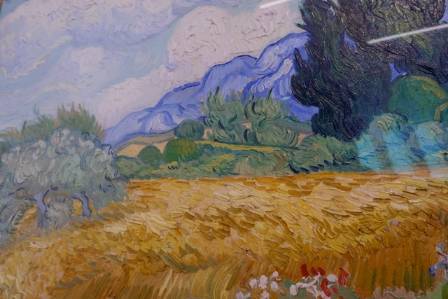
हार्वेस्ट गोल्ड इंटीरियर टोन के साथ अपने रहने की जगह को बदलें
रणवीर बिष्ट
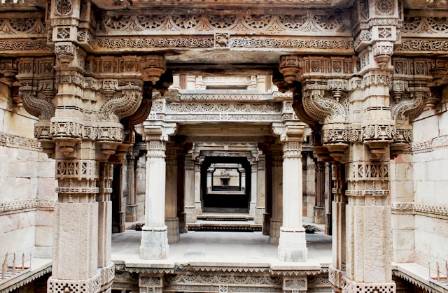
प्राचीन कलाकृतियाँ आधुनिक वास्तुकला को कैसे प्रेरित कर सकती हैं
संजय
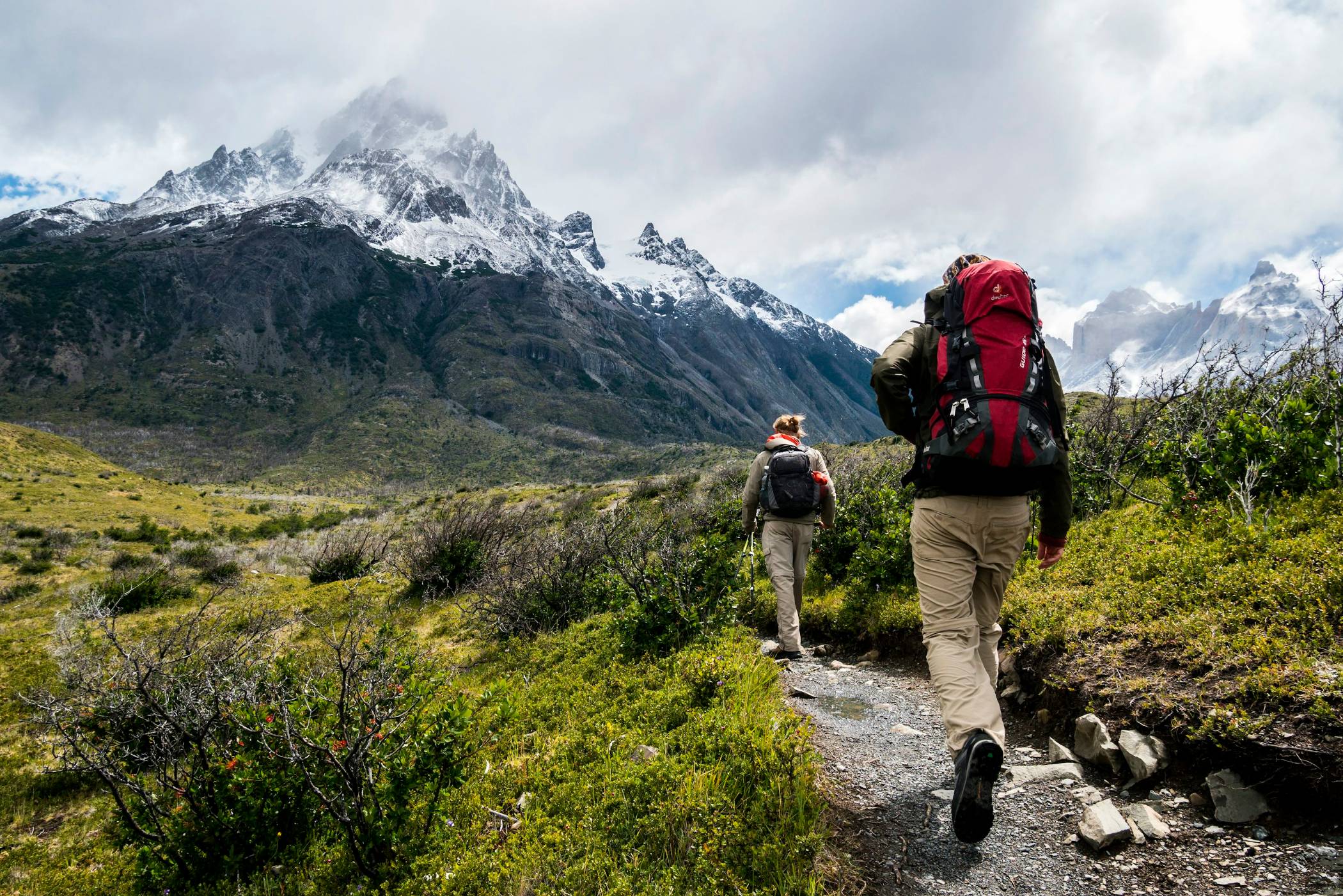
हमारी 12 सर्वश्रेष्ठ हाइकिंग टिप्स (15 साल की ट्रेकिंग से)
कार्तिक
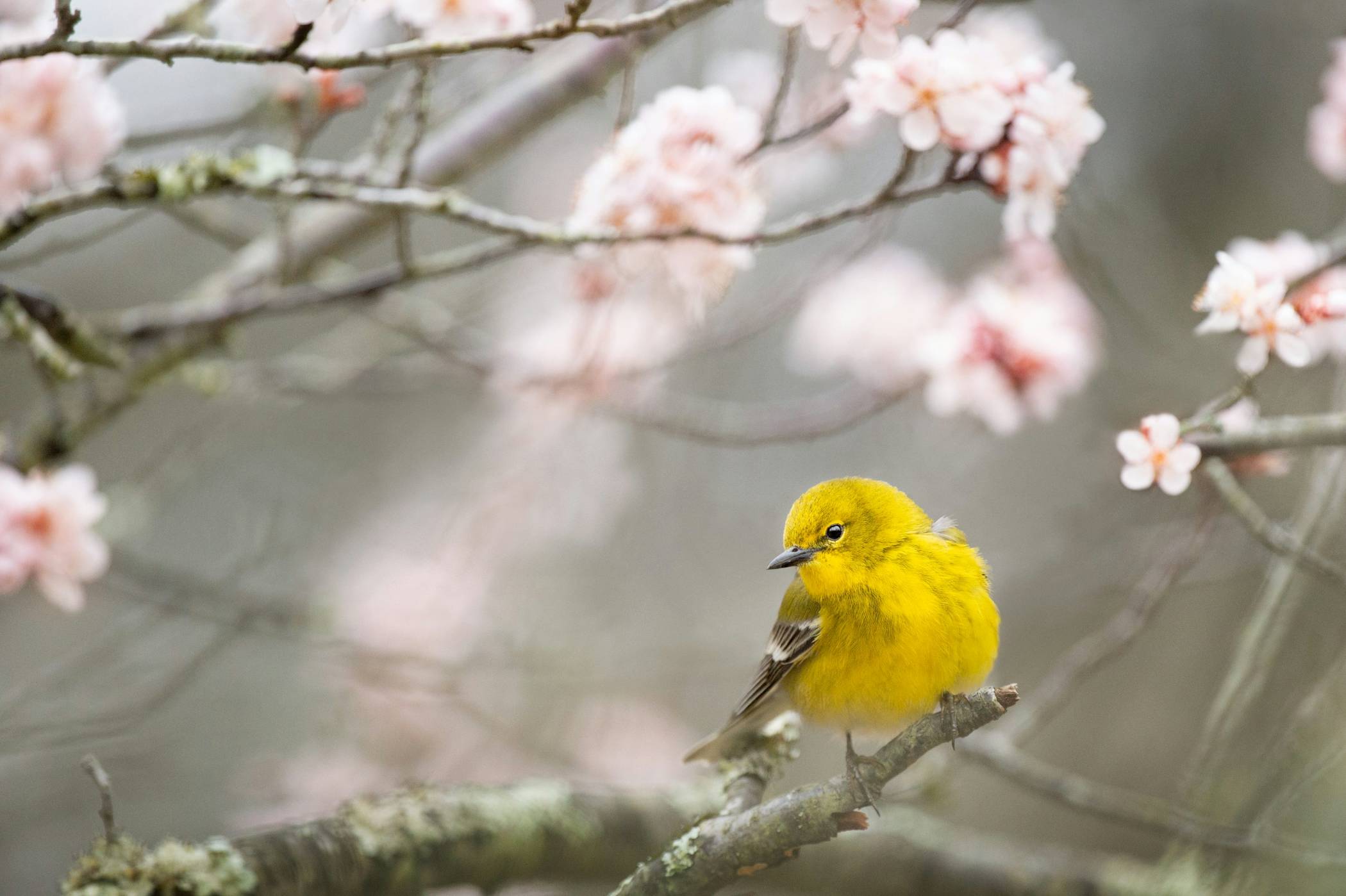
इन 20 सामान्य पक्षियों से मिलें
प्रिया
दुनिया भर के टॉप 9 एडवेंचर्स!
मौली