विशेष लेख
Lunar Rovers & Surface Vehicles
For decades, lunar rovers have played a vital role in exploring the Moon’s rugged and mysterious landscape. From the crewed vehicles of the Apollo era to sophisticated robotic explorers operated from Earth, these machines have extended humanity’s reach far beyond the limits of a spacesuit.
Damian Cole
लेखक
लेख परिचय
नीचे पूरा लेख पढ़ें।
अनुभाग
समाचार
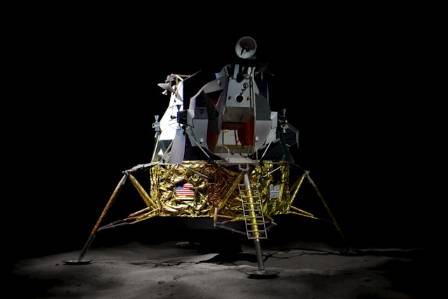
Apollo Lunar Roving Vehicle (LRV)
Used during the Apollo 15, 16, and 17 missions between 1971 and 1972, the Lunar Roving Vehicle was an electrically powered four-wheel rover designed to transport astronauts, scientific instruments, and collected samples across the Moon’s surface. Developed by Boeing together with General Motors’ Delco Electronics division, the rover had a mass of about 210 kilograms. In the Moon’s low-gravity environment, however, it could carry up to 490 kilograms of passengers and cargo. The vehicle could reach speeds of approximately 18 km/h. During the Apollo 17 mission, the LRV established a lunar driving record by covering a total distance of 35.9 kilometers.
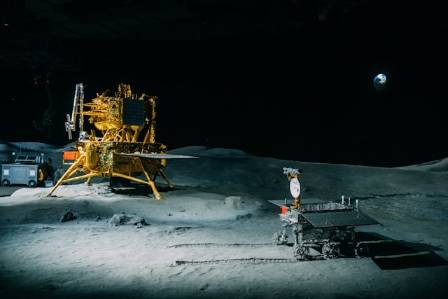
Lunokhod 1 and Lunokhod 2 (Soviet Union)
Lunokhod 1 and Lunokhod 2 were the first robotic rovers ever to operate on the Moon. Launched by the Soviet Union, Lunokhod 1 landed in 1970 and traveled around 10.5 kilometers during nearly eleven months of exploration. Its successor, Lunokhod 2, arrived in 1973 and covered approximately 42 kilometers across the lunar landscape. This achievement remained the distance record for a planetary rover for more than four decades until NASA’s Opportunity rover exceeded it on Mars in 2014. Both vehicles were remotely operated from Earth despite a communication delay of roughly 2.5 seconds each way.
Yutu (China)
China’s first lunar rover, Yutu, was delivered to the Moon by the Chang’e 3 mission in December 2013. Although it traveled only about 114 meters before a mechanical issue affected its mobility system, the rover continued functioning as a stationary scientific platform for several months. Its successor, Yutu-2, reached the far side of the Moon aboard the Chang’e 4 mission in January 2019. Since landing, it has traveled more than 1,500 meters and remains operational, making it the longest-lasting lunar rover in history.
Rashid (United Arab Emirates)
Rashid was the first lunar rover developed by the United Arab Emirates. The compact 10-kilogram vehicle was transported aboard the Japanese HAKUTO-R lunar lander operated by ispace. Unfortunately, the lander failed during its descent and crashed while attempting to reach the Moon in April 2023, resulting in the loss of the rover. Despite the setback, plans are already underway for a successor mission known as Rashid 2.
यह भी पढ़ें

घने जंगलों में छिपे आकर्षक जीवंत पुल
पद्मा

6 Of The Top-Rated Beach Vacation Destinations In The US
Robert Jones
2025 में दुनिया की शीर्ष 10 सबसे तेज़ कारें
राधा
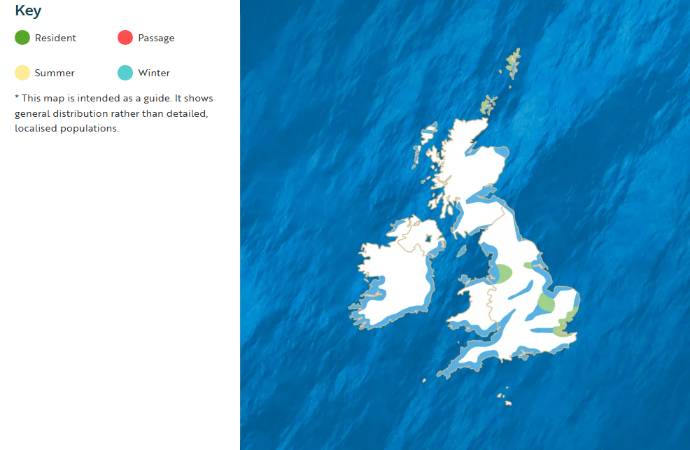
ब्लैक-टेल्ड गॉडविट
सौरभ

Discovering 4 World’s Best Ski Resorts
Ethan

क्वींसलैंड एयर द्वारा: नीचे की समृद्धियों का पक्षी की दृष्टि से दृश्य प्राप्त करें
अनन्या