विशेष लेख
Characteristics of Lilies
True lilies (Lilium species) are flowering plants that thrive in USDA hardiness zones 3 through 10. Although many plants are commonly called lilies, only members of the genus Lilium are considered true lilies. This genus contains around 100 species, which are grouped into several divisions, including Asiatic, American, Oriental, Martagon, Candidum, Longiflorum, Aurelian, Trumpet, and Species lilies.
Caleb Clark
लेखक
लेख परिचय
नीचे पूरा लेख पढ़ें।
अनुभाग
समाचार
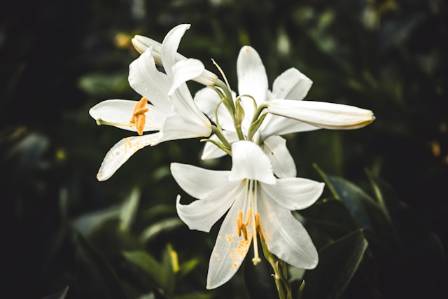
True lilies (Lilium species) are flowering plants that thrive in USDA hardiness zones 3 through 10. Although many plants are commonly called lilies, only members of the genus Lilium are considered true lilies. This genus contains around 100 species, which are grouped into several divisions, including Asiatic, American, Oriental, Martagon, Candidum, Longiflorum, Aurelian, Trumpet, and Species lilies.
Flowers
All true lily blooms share a similar floral structure. Each flower consists of three petals and three sepals arranged around the center of the blossom. Flower colors vary widely and may include white, yellow, orange, pink, purple, and other shades.
Lily flowers are perfect flowers, meaning they contain both male and female reproductive organs. Six elongated stamens extend from the flower’s center, with pollen-bearing anthers positioned to facilitate pollination by wind and visiting insects.
Although the basic floral parts remain consistent throughout the genus, flower forms differ significantly among species and cultivars. Common flower shapes include trumpet-shaped, star-shaped, bowl-shaped, funnel-shaped, and recurved flowers, often referred to as Turk’s cap lilies.
The blooms may face upward, outward, or downward depending on the variety. Many lilies feature contrasting markings, spots, or color patterns within the flower throat. However, not every lily species produces showy blooms every season.
Bulbs
Lilies develop from underground bulbs that consist of three primary components: the growing point, fleshy scales, and the basal plate.
The growing point is located at the top of the bulb and gives rise to stems and flowers. The basal plate forms the lower portion of the bulb and produces roots, new scales, and developing growth buds.
The scales function as modified underground leaves that store nutrients and energy during dormancy. Their color and appearance often help identify different lily species when flowers are absent.
Propagation is commonly achieved by lifting and dividing mature bulbs. When bulbs become crowded, they can be separated into smaller sections and replanted to produce new plants.
Depending on climate conditions, bulbs may either remain in the ground throughout winter or be lifted and stored until the next growing season.
Stems
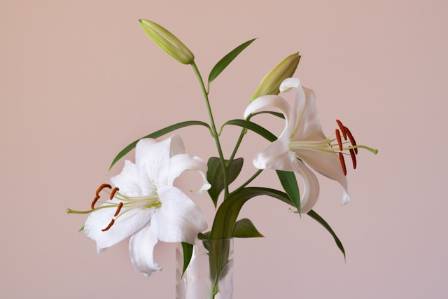
Lily flowers are borne on upright stems that vary greatly in height among species. Some lilies grow only about 30 centimeters (1 foot) tall, while others can exceed 3 meters (10 feet) in height.
Most stems are green, ranging from pale green to deep green shades, although certain varieties display reddish or purple-tinted stems.
Generally, lily stems are strong and capable of supporting their blooms. However, large-flowered varieties may become top-heavy, causing stems to bend or lean.
In such cases, staking can provide additional support. A stake placed beside the stem and loosely tied to the plant helps keep it upright and prevents damage.
Because lilies are available in many sizes, gardeners can create an entire landscape bed using only lilies. Taller varieties can serve as background plants, medium-sized types can fill the center, and compact lilies can be planted along borders.
Leaves
Although lily foliage may appear simple, it plays a crucial role in the plant’s growth and flowering cycle.
Leaves absorb sunlight and convert it into energy through photosynthesis. The carbohydrates produced are stored within the bulb and later used to support future flowering and growth.
For this reason, it is important not to remove lily foliage immediately after blooming. The leaves should remain on the plant until they naturally yellow and die back, allowing nutrients to return to the bulb before dormancy.
Leaf arrangement differs among species. Some lilies produce foliage primarily near the base of the plant, while others develop leaves along the entire length of the stem up to the flowers. Easter lilies (Lilium longiflorum), for example, often carry leaves all the way up the stem.
Many lilies display leaves arranged in circular whorls around the stem. Leaf shape also varies considerably, with some species having long, narrow leaves resembling grass blades, while others develop shorter and broader foliage.
Conclusion
True lilies are remarkable flowering plants with a unique combination of elegant blooms, nutrient-storing bulbs, sturdy stems, and productive foliage. Understanding the structure and function of each part of the plant can help gardeners provide better care and enjoy healthier, more spectacular displays year after year.
यह भी पढ़ें

अपनी व्यक्तिगत शैली के लिए आदर्श ब्रेसलेट खोजें
भावना कोचर

दुनिया भर में टॉप 3 बेहतरीन आलू चिप ब्रांड्स
कृति

10 में 2023 वैज्ञानिक खोजें
लवीना

7 Essential Surfing Facts Every Beginner Should Know
Evelyn Parker

स्पेस एक्सप्लोरेशन का एक छोटा सा इतिहास
दिव्या

लाल गुलाब प्रेम और रोमांस का प्रतीक हैं। पेश है लाल फूलों वाले गुलाबों की हमारी पसंदीदा किस्में।
अक्षय