Species Overview and Classification
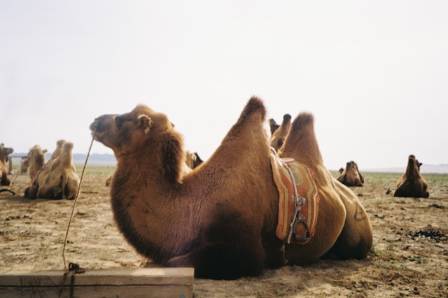
Camels, belonging to the family Camelidae, are iconic mammals uniquely adapted to thrive in Earth’s harshest arid and semi-arid environments. Closely related to South American camelids—llamas, alpacas, guanacos, and vicuñas—they have evolved distinct traits tailored to desert life over millions of years. Today, three living species exist, with the majority being domesticated. The dromedary (Camelus dromedarius), characterized by a single hump, inhabits dry regions across Africa and Asia, from the vast Sahara Desert to the arid landscapes of the Middle East and the Indian subcontinent. The Bactrian camel (Camelus bactrianus) is divided into two subspecies: the domestic Bactrian, widespread across Central Asia, and the critically endangered wild Bactrian (Camelus ferus), found only in remote, harsh habitats of Mongolia and northwestern China. Unlike their domestic counterparts, wild Bactrian camels have smaller humps, thinner fur, and a more robust build, adapted to survive in areas with scarce water and extreme temperature fluctuations. With fewer than 1,000 wild individuals remaining, they are classified as Critically Endangered by the IUCN, highlighting the need for targeted conservation efforts.
The Truth About Camels’ Humps: Fat Storage, Not Water Reservoirs
One of the most common misconceptions about camels is that their humps store water—but this is far from the truth. Instead, these distinctive structures are specialized fat reserves, a crucial adaptation for surviving in environments where food and water are unpredictable. A healthy camel’s hump can weigh up to 36 kilograms (80 pounds), consisting almost entirely of adipose tissue. When resources are scarce, the camel’s body breaks down this fat into energy and metabolic water—a byproduct of fat metabolism. For every kilogram of fat burned, approximately 1.1 kilograms of water is produced, providing both sustenance and hydration during long periods without access to food or drink. This adaptation allows camels to go up to two weeks without eating and several days without drinking, depending on environmental conditions and activity levels. Interestingly, a camel’s hump will shrink and flop to one side as fat is consumed, returning to its upright position once the animal feeds and rehydrates. This visible change serves as a clear indicator of the camel’s nutritional status.
Extreme Water Conservation: Physiological Adaptations to Minimize Loss
Camels are masters of water conservation, with a suite of physiological adaptations that reduce water loss to extraordinary levels. Their kidneys are highly efficient at concentrating urine, producing a thick, syrupy fluid that contains minimal water—this not only conserves moisture but also reduces the need for frequent urination. Similarly, their feces are extremely dry, often so solid that they can be used as fuel for fires, a testament to how little water is wasted in digestion. Another remarkable adaptation is the camel’s ability to reabsorb water from exhaled air. When a camel breathes out, the air passes over moist mucous membranes in its nasal passages, which cool the air and condense water vapor back into liquid form. This water is then reabsorbed into the bloodstream, preventing the loss of precious moisture with each breath. Additionally, camels can tolerate a loss of up to 30% of their body weight in water—far more than most mammals, which would die from a 15% loss. When they do find water, camels can drink enormous quantities quickly: a single dromedary can consume up to 100 liters (26 gallons) of water in just 10 minutes, rapidly rehydrating their bodies without causing water intoxication, thanks to their flexible red blood cells that can expand to accommodate extra fluid.
Coping with Extreme Temperatures: Dual Adaptations for Heat and Cold
Camels are uniquely equipped to handle both scorching heat and freezing cold, making them versatile survivors in deserts where temperatures can swing from -20°C (-4°F) at night to 50°C (122°F) during the day. Unlike most mammals, which maintain a constant body temperature, camels allow their body temperature to fluctuate between 34°C (93°F) and 41°C (106°F). This thermoregulatory flexibility reduces the need for sweating, as they only begin to sweat when their body temperature exceeds 41°C—minimizing water loss. Their thick, shaggy fur also plays a dual role: in hot weather, it acts as insulation, reflecting sunlight and trapping a layer of cool air close to the skin, while in cold conditions, it provides warmth. Studies have shown that shorn camels lose 50% more water through sweating than unshorn ones, proving the value of their fur in heat protection. Camels also lack a stifle fold—a flap of skin between the abdomen and thighs found in many mammals—which allows air to circulate under their bodies when they lie down, preventing overheating. To protect against scorching sand, they have leathery, heat-resistant pads on their feet, knees, elbows, and sternum, enabling them to rest comfortably without burning. For cold environments, such as the Central Asian steppes, Bactrian camels grow an extra-thick winter coat that sheds completely in spring, adapting to seasonal temperature changes.
Secrets of Walking on Sand: Wide Feet and Weight Distribution
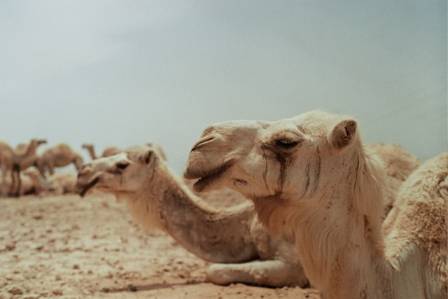
Navigating soft, shifting sand without sinking is a challenge, but camels have evolved specialized feet to overcome this obstacle. Instead of small, pointed hooves, camels have wide, flat feet that resemble snowshoes, measuring up to 30 centimeters (12 inches) in length. Each foot has two toes connected by a flexible webbing, which spreads out when the camel steps, increasing the surface area in contact with the sand. This design distributes the camel’s weight—up to 1,000 kilograms (2,200 pounds) for large males—evenly across the surface, reducing pressure and preventing them from sinking. The soles of their feet are also thick and rubbery, providing grip on slippery sand and protecting against sharp rocks or hot surfaces. This adaptation allows camels to traverse sand dunes and soft desert terrain with ease, expending less energy than animals with narrower feet. Their unique gait—moving both legs on one side of the body at the same time—also helps maintain balance on unstable ground, making them efficient desert travelers.
Sensory Protection: Eyes and Noses Adapted to Combat Sand
Deserts are filled with blowing sand and dust, which pose significant risks to a camel’s eyes and respiratory system—but nature has equipped them with specialized defenses. Camels have extremely long, thick eyelashes, often measuring up to 7 centimeters (2.8 inches) in length, which act as a barrier against sand particles. Research has found that the optimal length of eyelashes is approximately one-third the width of the eye they protect, a ratio that minimizes airflow around the eye and prevents debris from entering—camels’ eyelashes perfectly fit this ratio, making them highly effective. Additionally, camels have a third eyelid, known as a nictitating membrane, a thin, transparent layer that sweeps horizontally across the eye like a windshield wiper. This membrane removes any sand or dust that gets past the eyelashes without blocking vision, allowing camels to see clearly even in sandstorms. To protect their noses, camels can fully close their nostrils, preventing sand from entering their respiratory system. Their nasal passages are also lined with hair and moist mucous membranes that trap dust particles, further safeguarding their lungs. These adaptations make camels nearly impervious to the harsh effects of desert sandstorms.
Specialized Diet: Thriving on Thorny, Fibrous Plants
Desert environments offer limited food options, but camels have evolved to survive on tough, thorny plants that most other herbivores avoid. Their diet primarily consists of fibrous vegetation, including thorny shrubs, dry grasses, herbs, and even the leaves and bark of desert trees like acacias. To consume these prickly plants without injury, camels have developed a suite of oral adaptations: their lips are thick and tough, their tongues are covered in hard, horn-like papillae (fleshy protrusions), and the lining of their mouths and cheeks is reinforced with a tough, keratinized layer. These structures allow camels to grasp, manipulate, and swallow sharp thorns without damaging their mouths. Camels are also “pseudoruminants,” meaning they have a three-chambered stomach (instead of the four chambers of true ruminants like cows) that allows them to ferment and digest tough plant fibers efficiently. When they eat, food first enters the rumen, where microbes break it down into a semi-digested mass called cud. The camel then regurgitates the cud and chews it thoroughly to further break down the fibers before swallowing it again for final digestion. This process maximizes nutrient absorption from low-quality, fibrous food, enabling camels to survive on diets that would starve other animals.
Ecological Role and Conservation Status
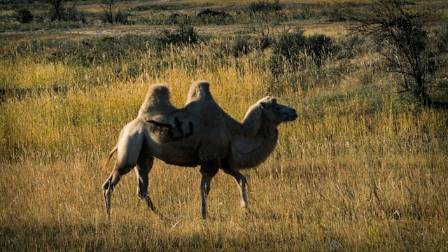
Camels play a vital ecological role in desert ecosystems, as their foraging behavior helps control plant growth and disperse seeds through their feces. Domestic camels have also been integral to human societies for millennia, serving as pack animals, sources of milk, meat, and wool, and facilitating trade across vast desert regions. However, the only wild species—the wild Bactrian camel—faces severe threats, including habitat loss, poaching, and competition with domestic livestock for food and water. With a global population of fewer than 1,000 individuals, they are one of the world’s most endangered mammals. Conservation efforts are underway to protect their remaining habitats, establish protected areas, and reduce human-wildlife conflict. Captive breeding programs have also been initiated to boost their numbers, though the species remains critically at risk. Understanding the unique adaptations of camels not only highlights the wonders of evolutionary biology but also underscores the importance of protecting these remarkable animals and the fragile desert ecosystems they inhabit.